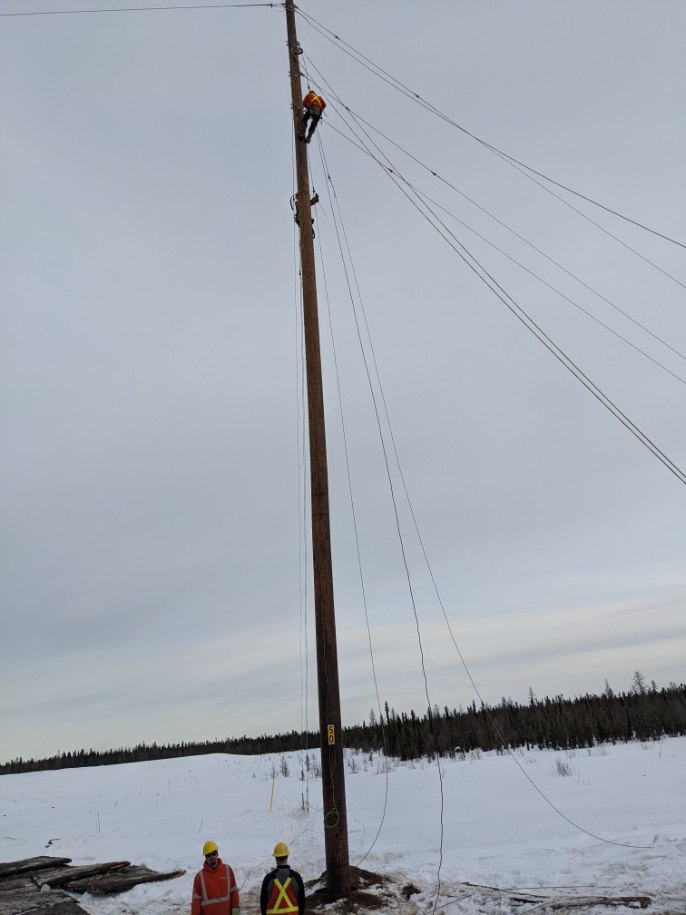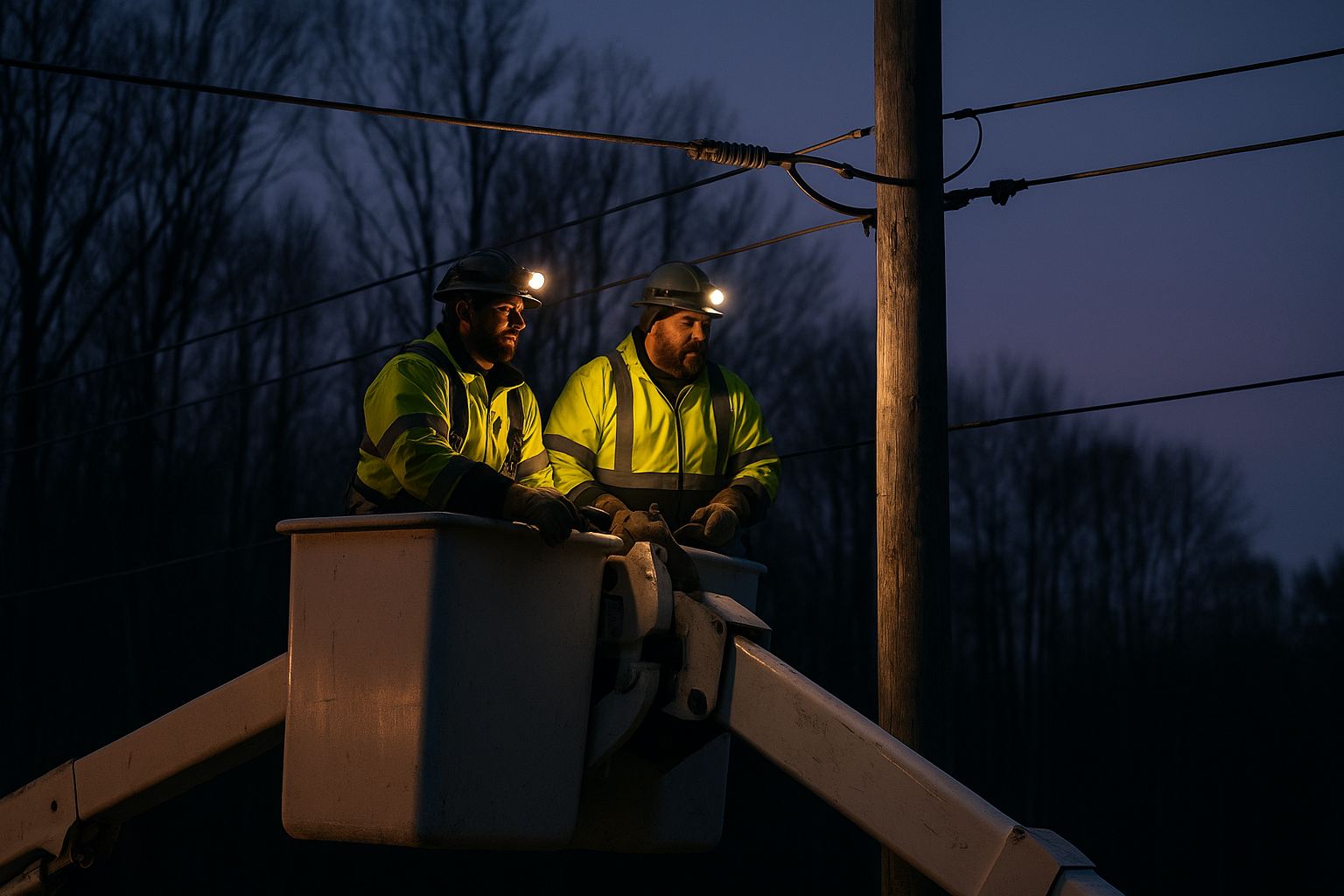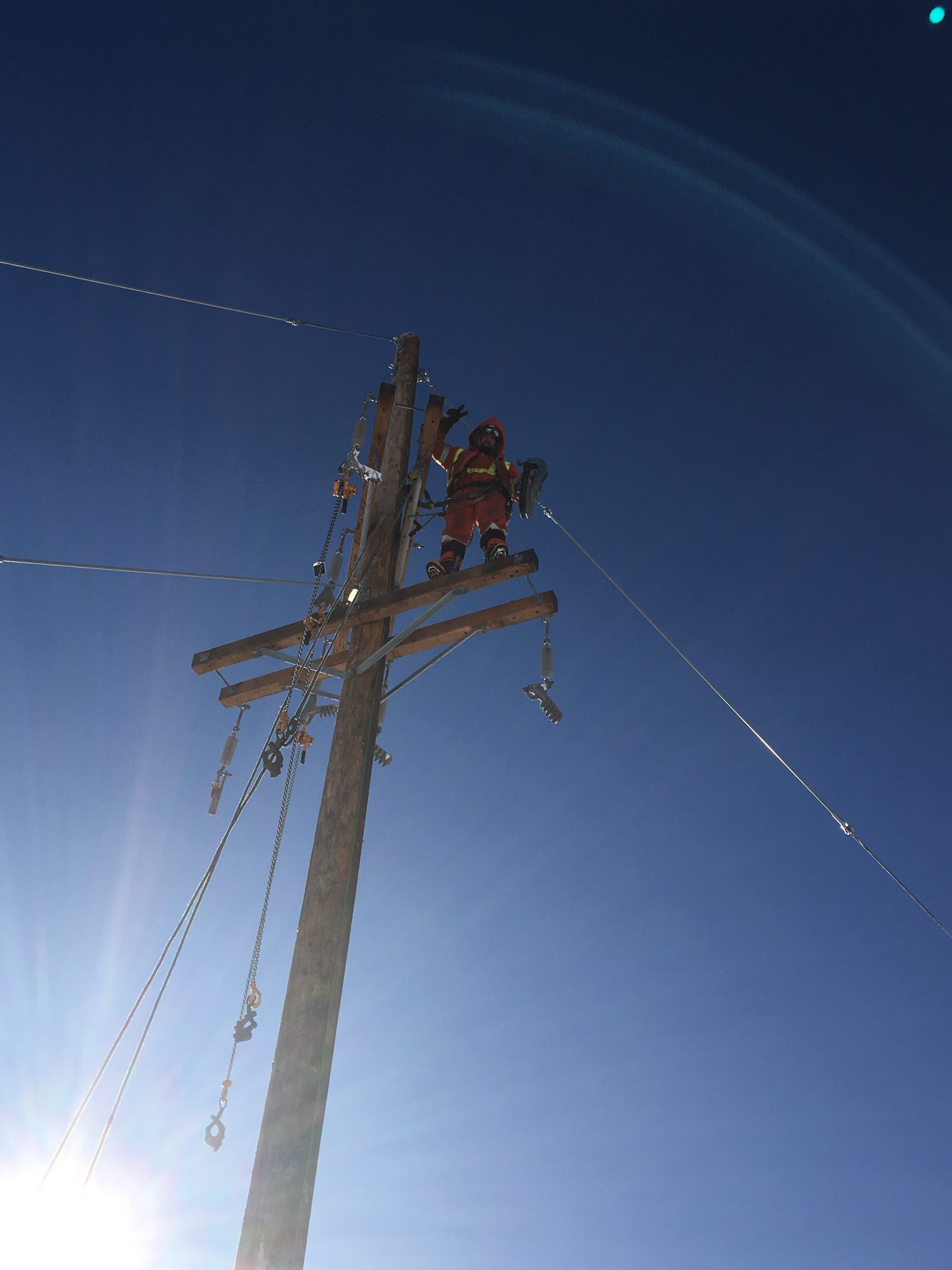
Canada's Powerline Industry Publication · Issue 02 · October 2026
PLT MAGAZINE
CANADA'S LINEMAN MAGAZINE · A LINEMAN CANADA PUBLICATION
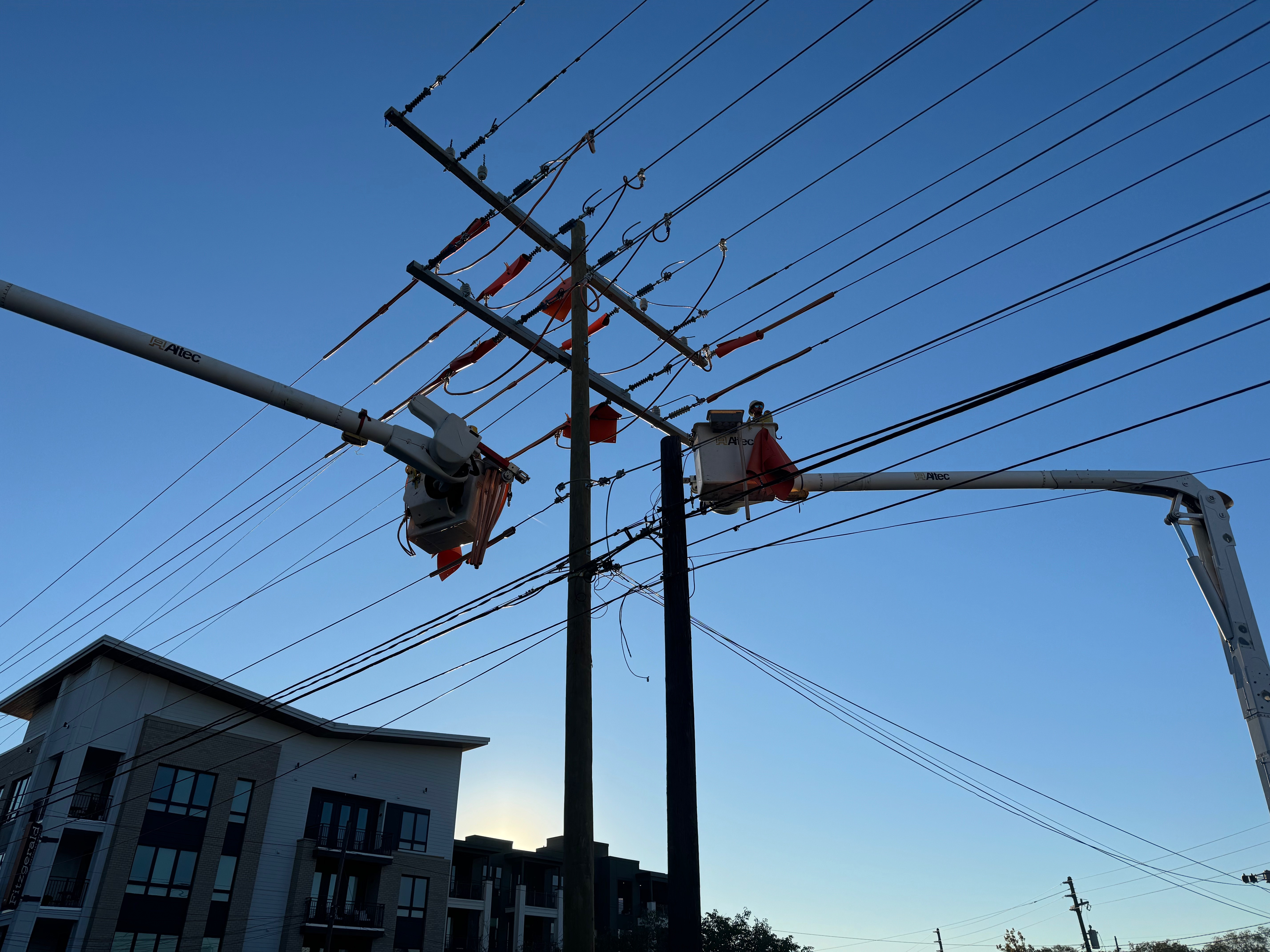
October PLT Magazine cover: powerline industry field photography
ISSUE 02 · STORM READINESS & FALL OPERATIONS

Storm Readiness, Workforce & Fall Operations

Storm Readiness, Workforce & Fall Operations

One Lineman ID.
Multiple Industry Roles.
Recruitment, Workforce
& Project Readiness.
Training, Careers
& Industry Opportunity.
LINEMAN.CAOctober 6, 2026MONTHLY · FIRST TUESDAY
IN THIS ISSUE

Contents

STORM

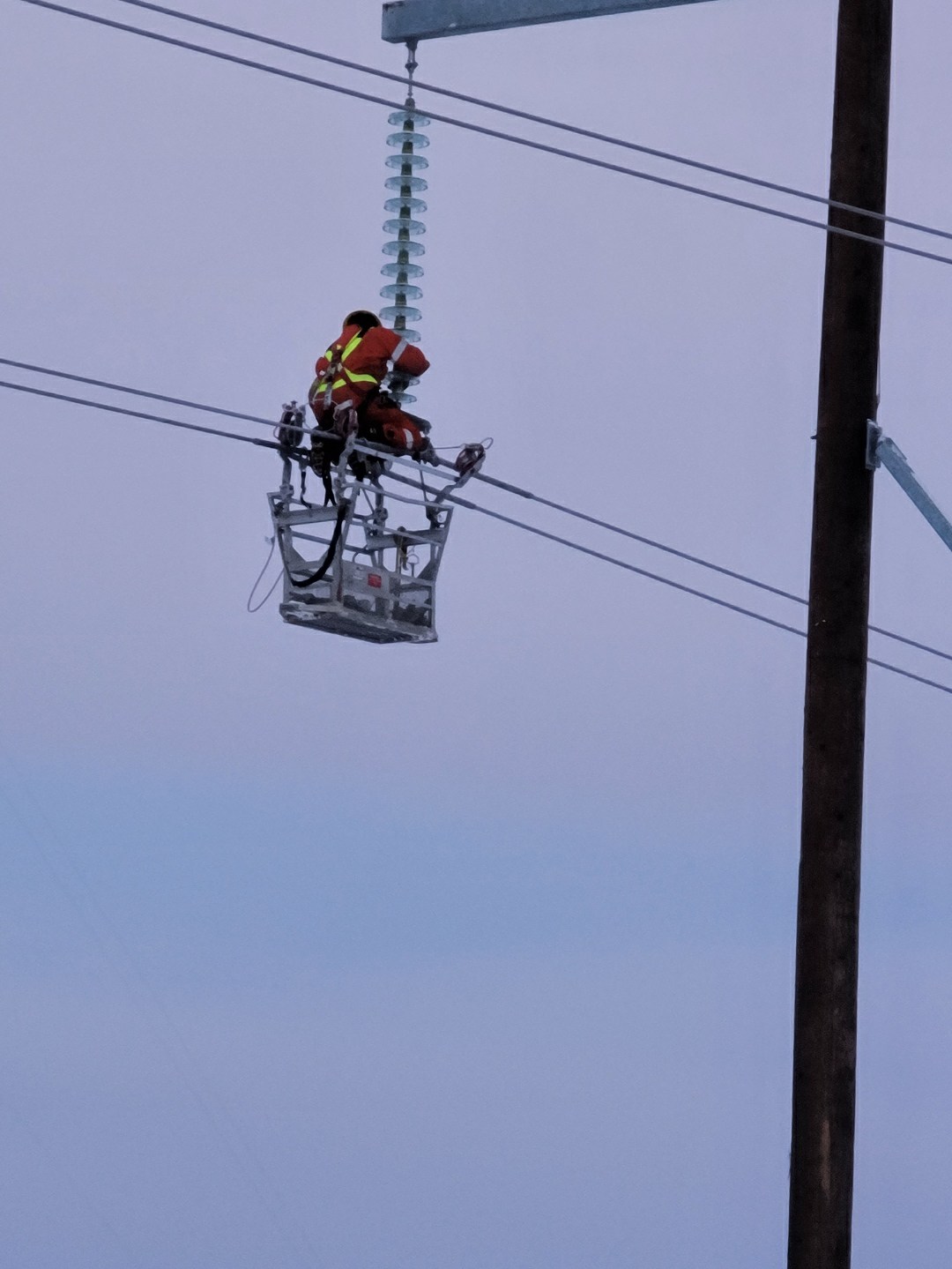
Storm Readiness Before the Call Comes

Fall operations can feel like a race: finishing planned work, preparing for winter access, and trying to hold the line on production while the forecast turns unstable.
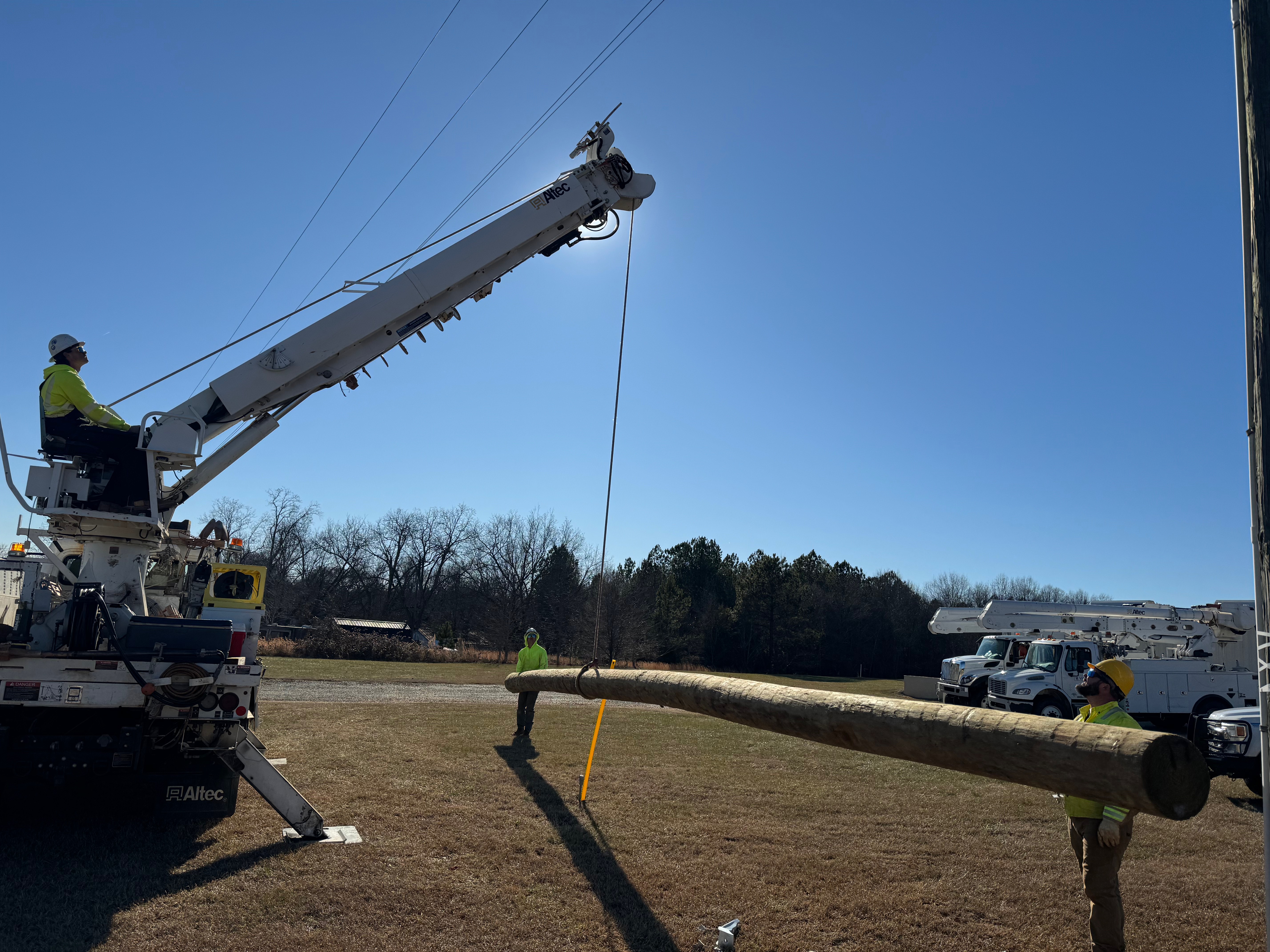
Storm Readiness Before the Call Comes — field photograph
PLT MAGAZINE · FROM THE FIELD

Fall operations can feel like a race: finishing planned work, preparing for winter access, and trying to hold the line on production while the forecast turns unstable. But across Canada, the organizations that restore fastest and safest in major weather tend to do the same “boring” work early—tightening logistics, standardizing briefings, validating tools and PPE, and pre-positioning the relationships that make mutual assistance function when the grid gets hit.

This article is not a substitute for your employer’s procedures, utility standards, jurisdictional OHS requirements, or manufacturer instructions. It’s a practical, pre-storm readiness lens for crews, contractors, supervisors, trainers, and system operators—what to do in the weeks before the call comes.

1) Start with a fall “storm readiness gap check” (not a wish list)

The best storm plans are executable under pressure. Before you update a binder, run a short gap check that forces decisions:

  • What events are we planning for? Wind, early wet snow, ice loading, flooding, wildfire-related access restrictions, and multi-day outages that strain staffing and fuel. BC Hydro, for example, explicitly flags storm impacts like fallen trees and ice loading on lines in its climate and operational risk discussion, alongside the importance of vegetation management and preparedness capabilities.
  • What breaks first in our service area? Road washouts, saturated shoulders, tree failures, limited bridge load ratings, isolated feeders, or long patrol distances.
  • What’s our restoration “tempo” constraint? Damage assessment speed, switching/dispatch capacity, material bottlenecks, or the ability to house and feed incoming crews.
  • What is the one capability we can improve in 30 days? Example: standardize damage-assessment reporting so every patrol returns the same minimum data set.

If you can’t answer these in a one-hour meeting, your storm plan is probably too complex to run at 3 a.m.

2) System readiness: clear the friction before it becomes outage time

Vegetation and hazard trees: focus on “storm consequences,” not just cycle trimming

Fall is when summer growth meets wetter soils and higher winds. Utilities consistently cite vegetation as a major driver of storm-related outages, and also as an area where proactive investment reduces storm season impacts. BC Hydro, for instance, describes removing trees/vegetation that could pose a storm-season problem and notes significant annual vegetation management investment as part of storm and wildfire mitigation efforts.

Practical fall moves that matter:

  • Targeted patrols on known trouble spans: edge-of-ROW hazard trees, saturated root plates, and historical blowdown corridors.
  • Access-first clearing (gates, approaches, pullouts) so crews can get in safely under poor visibility and slick conditions.
  • Pre-identified “no-go” triggers (wind thresholds, ice loading, floodplain conditions) so supervisors aren’t making first-time judgment calls mid-event.

Materials and mobile equipment: stock what actually fails, where it fails

Storm readiness isn’t “more inventory.” It’s the right spares staged to match your grid’s failure modes and geography. A simple approach:

  • Top-20 storm items list based on your last 3–5 major events (pins, insulators, cutouts, crossarms, hardware assortments, fusing, wire, grounds, connectors, pole keys, chain/come-alongs, etc.).
  • Package by job type (wire-down hazards, broken pole, conductor slap/flashover, service drops, distribution transformer changeout) so trucks don’t become rolling warehouses.
  • Verify lift/haul readiness (tire condition, chains, winch lines, outriggers, hydraulic leaks, lighting). In fall, darkness arrives early—night work becomes normal during restoration.

Damage assessment: standardize the minimum data you need to restore

Many restoration delays are “information delays.” If patrols return incomplete or inconsistent data, dispatch and planners can’t build an efficient work queue.

Before storm season, define a minimum damage-assessment record that every patrol returns (whether on paper, mobile app, or radio):

  • Hazard status: wire down? public exposure? road blocked?
  • Location precision: pole number, GPS, nearest civic address, access constraints.
  • Work estimate: crew type required, equipment required, materials likely required.
  • System context: feeder/sectionalizing devices involved, critical loads nearby (as applicable to your utility process).

Hydro One’s public-facing restoration messaging highlights that estimated restoration times are determined once damage has been assessed—an important reminder that assessment speed and quality strongly influence customer expectations as well as field efficiency.

3) Workforce readiness: mutual assistance, onboarding, and fatigue plans that function

Mutual assistance: confirm the “legal and logistical plumbing” now

Mutual aid works best when it’s treated as a year-round capability, not an emergency scramble. In Ontario, Electricity Canada’s Ontario Mutual Assistance Program (OnMAG) is designed as a single point of contact for requesting and offering resources during damaging events, supported by an agreement framework addressing wages, payroll taxes, workers’ compensation, and related contingencies. Electricity Canada has also discussed expanding mutual assistance connectivity beyond a single province through broader agreements.

Fall readiness actions for leaders and contractors:

  • Confirm membership/agreements and contact lists are current (24/7 numbers, escalation chain, dispatch interfaces).
  • Pre-define “crew packages” you can send (type, headcount, equipment, typical daily production, what they don’t do).
  • Decide your onboarding standard for incoming crews: safety orientation, switching/permit interfaces, radio protocols, minimum PPE requirements, maps, and local hazards.

In its regulatory filing materials describing major event response, Hydro One references activating emergency response plans upon early weather alerts and conducting pre-storm briefings with internal and mutual assistance crews—emphasizing hazard awareness, system-specific risks, and adherence to procedures. That emphasis is a useful benchmark: mutual aid is only as safe as the clarity you provide to incoming people.

Fatigue and accommodations: plan the “unsexy” constraints

Storm work frequently becomes extended shifts, night operations, and emotionally charged customer contact. Even the best crews degrade under poor sleep, irregular meals, and cold wet gear.

Consider a fall audit of:

  • Sleeping capacity: hotel blocks, camp options, bunk trailers, shower access.
  • Feeding plan: when restaurants close early, what’s your on-shift meal plan?
  • Drying and warming: space for wet PPE and gloves; heated break areas; spare socks and glove liners in logistics kits.
  • Shift handover discipline: simple written handover notes prevent repeat patrols and missed hazards.

If your organization already uses formal fatigue risk management, align this audit to that framework. If not, keep it practical: the goal is predictable rest and fewer errors during the highest-risk work.

4) Jobsite readiness: tighten the basics that prevent injuries and rework

Job briefings: elevate them for storm hazards

Storm work changes the hazard picture: unstable trees, hidden conductors, pooled water, compromised structures, reduced visibility, and public traffic in chaotic conditions. Your normal job brief should expand to include storm-specific prompts such as:

  • Weather and visibility triggers (wind gusts, lightning, freezing rain onset).
  • Tree and structure stability (hang-ups, root plate heave, leaning poles, compromised anchors).
  • Access and egress (soft shoulders, washouts, blocked roads, alternate routes).
  • Public interface (scene control, signage, spotters, and what gets escalated to police/fire/utility control).

PPE and test equipment: fit, function, and availability before peak season

Fall is a strong time to do a “no surprises” inspection cycle: rain gear integrity, insulated gloves and protectors, face protection, layers for wet cold conditions, headlamps, and spare batteries. On the electrical safety side, many Canadian workplaces align arc-flash and shock work practices with CSA Z462 (Workplace electrical safety). The 2024 edition includes updates such as reorganized requirements for establishing an electrically safe work condition, and it added emphasis that absence-of-voltage verification is done at each point of work. It also changed how arc-flash PPE selection tables are presented and replaced category numbers with minimum arc ratings in the relevant tables.

What that means operationally isn’t “change everything overnight.” It means supervisors and trainers should confirm that:

  • People know the site’s current program version and what your employer has adopted.
  • Voltage verification practices match your procedure and are supported by appropriate test instruments and training.
  • PPE labeling and availability support the tasks you’ll face during restoration, including switching, testing, and temporary configurations.

Field planning note: if your organization is updating programs to align to CSA Z462-24, do it before storm tempo hits—training and field coaching are harder mid-event.

Restoration sequencing: align everyone to “public safety first”

Utilities often describe restoration prioritization starting with public safety hazards (like downed wires), then critical infrastructure, then larger customer blocks. Hydro One’s major event response materials, for example, describe a public safety-first restoration triage model. That sequencing is worth reinforcing in fall briefings because it helps crews, contractors, and customer-facing staff explain decisions consistently under pressure.

For crews, this also reduces conflict at the tailboard: if everyone shares the same priorities, you spend less time debating and more time making the site safe.

5) Public messaging: pre-build what you’ll repeat during every major event

Storm readiness isn’t only internal. Your customers’ behaviour affects your risk: people approach downed wires, attempt unsafe generator setups, or enter flooded basements with energized equipment.

Many Canadian utilities and the Government of Canada emphasize simple, repeatable outage and safety guidance. Hydro One’s storm safety messaging includes staying well back from downed power lines and reporting hazards, and it warns about generator placement outdoors and away from openings. The Government of Canada’s emergency preparedness guidance also highlights household planning for power outages and associated risks (food safety, communications, carbon monoxide, and extreme temperatures).

Fall is the right time to align comms, operations, and call centre scripts around:

  • Downed wire messaging (distance, reporting pathways, do-not-touch reminders).
  • Generator and carbon monoxide warnings (clear, consistent phrasing).
  • Why restoration times are uncertain early (damage assessment dependency).
  • What customers can do now (kits, outage tools, outage reporting methods).

6) A one-page fall readiness checklist you can use Monday morning

  • Operations: confirm storm roles, EOC/ICC activation triggers, and field escalation pathways.
  • Damage assessment: define minimum report fields; practice one simulation day.
  • Materials: stage top storm spares; package by job type; confirm after-hours yard access.
  • Fleet: lighting, tires, chains, hydraulics, winch lines, and cold-weather kits inspected.
  • Mutual assistance: validate agreements, contacts, onboarding package, and lodging/feeding plan.
  • Training: storm-tailboard prompts, public interface, and refreshers on testing/verification practices per your program.
  • PPE: rain gear, layers, glove systems, face protection, headlamps, spare batteries and chargers.
  • Comms: pre-approved customer safety messages; outage-map/app instructions; call centre storm scripts.

Storm readiness doesn’t eliminate the chaos—Canada will keep delivering shoulder-season surprises. But the work you do in September and early October can change what the first 48 hours feel like: fewer improvised decisions, fewer missing parts, clearer briefings, faster assessment, and a safer pace when the pressure is highest.
WORKFORCE

The Canadian Powerline Workforce: Where the Pressure Is Building

Across Canada, the powerline workforce is facing a pressure pattern that line crews can feel long before it shows up in a spreadsheet: storm response is more frequent and logistically heavier, major utilities and contractors are competing for the same experienced hands, and apprenticeship systems are being asked to deliver more throughput without diluting competence.

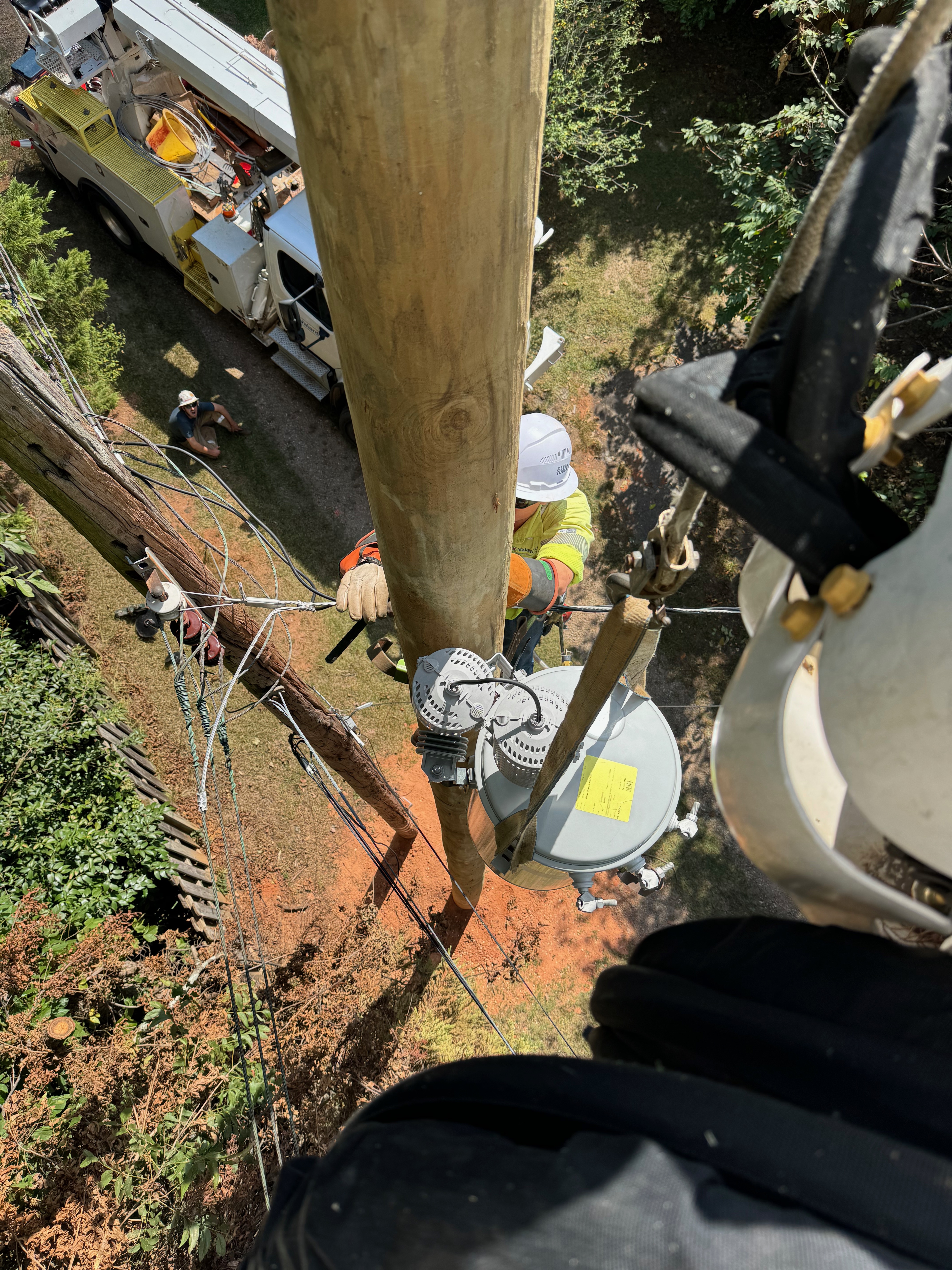
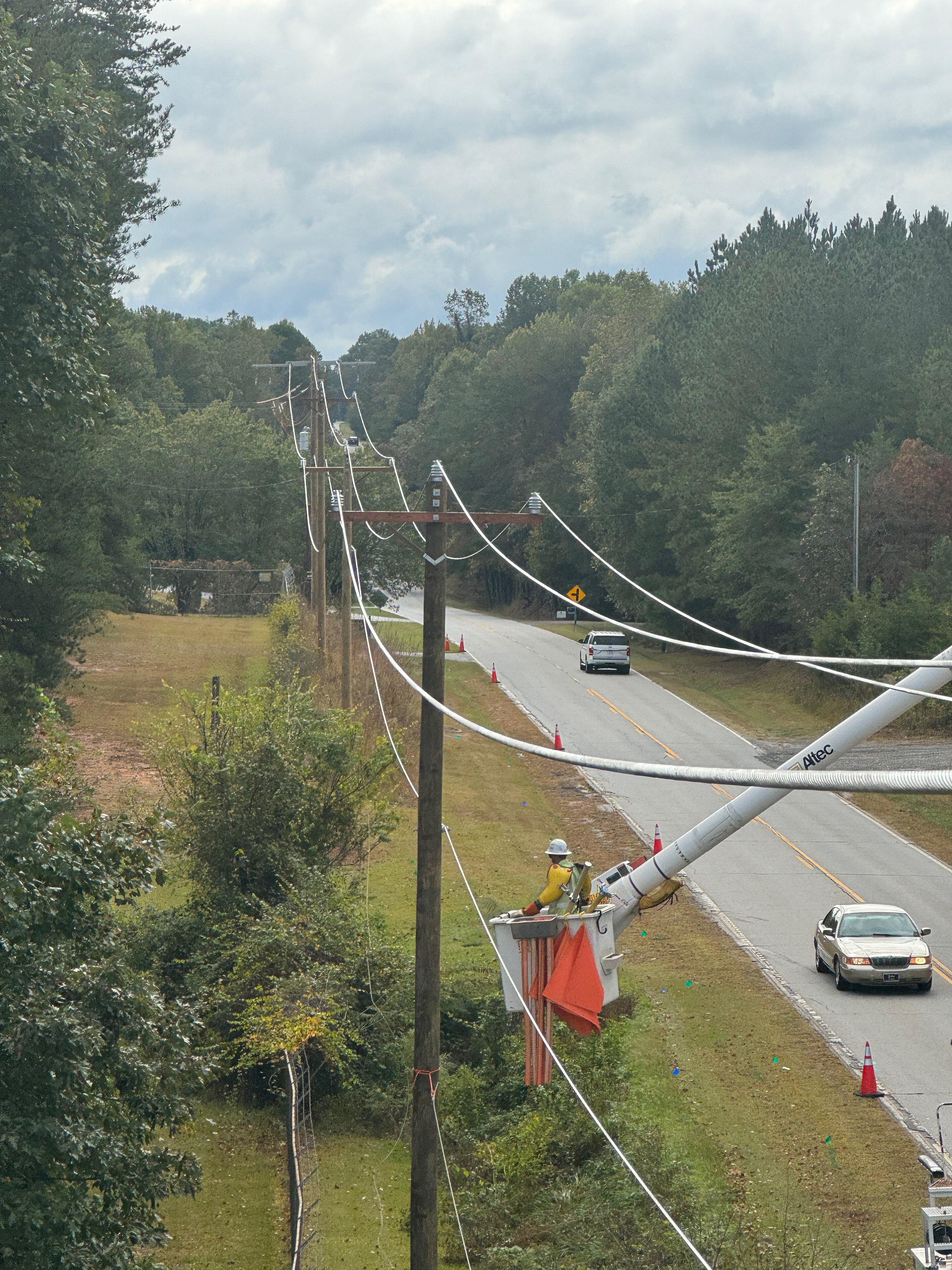
The Canadian Powerline Workforce: Where the Pressure Is Building — field photograph
PLT MAGAZINE · FROM THE FIELD

Across Canada, the powerline workforce is facing a pressure pattern that line crews can feel long before it shows up in a spreadsheet: storm response is more frequent and logistically heavier, major utilities and contractors are competing for the same experienced hands, and apprenticeship systems are being asked to deliver more throughput without diluting competence. The result is a familiar paradox: in some regions there may be enough people in the occupation on paper, yet dispatch and supervisors still struggle to field the right mix of qualified, current, and storm-ready workers on short notice.

This article is about where the pressure is building—demand, mobility, qualifications, and experience—and what that means for lineworkers, apprentices, employers, and trainers heading into fall operations.

Demand: the national picture can look “balanced” while local reality stays tight

At the national level, Employment and Social Development Canada’s Canadian Occupational Projection System (COPS) forecasts that, for Electrical power line and cable workers (NOC 72203), job openings and job seekers may be roughly similar over the 2024–2033 period (3,200 openings and 3,200 seekers). (Employment and Social Development Canada) That’s an important anchor: it suggests the occupation isn’t universally facing an unlimited shortfall everywhere, every year.

But Job Bank outlooks—which are presented by region and updated with recent trend data—still show “Good” prospects in some high-demand areas (for example, Ontario’s 2025–2027 outlook). (Government of Canada Job Bank) For employers and crews, that combination (balanced long-term, tight short-term, uneven by region) is the recipe for volatility: hiring pressure spikes around storm seasons, large capital programs, and planned outages, and then relaxes—until the next event.

Two things make “average” conditions misleading for linework:

  • Experience matters disproportionately. Not every worker in the occupation can step into storm restoration leadership, complex switching support, or high-risk distribution and transmission tasks with the same readiness.
  • Mobility is constrained by more than a ticket. Travel time, family commitments, rotational fatigue, employer policies, and differing utility work methods all affect whether mutual aid is actually available when the system needs it.

Storm response is a workforce issue, not just an emergency-management issue

Utilities have always depended on surge capacity during major outages. What’s changing is how consistently that surge capacity is being used—and how much planning is required to bring outside crews in safely and efficiently. Electricity Canada’s emergency-management material captures the scale of logistics during large events, including feeding and housing mutual assistance personnel and coordinating fuel and staging. (www.electricity.ca)

In Ontario, Electricity Canada’s Ontario Mutual Assistance Program (OnMAG) formalizes a single point of contact for utilities to request and offer resources during damaging events, and it positions mutual assistance as an ongoing program—complete with meetings to share lessons learned and restoration experience. (www.electricity.ca)

For the workforce, that matters because mutual assistance is no longer an occasional favour—it’s becoming part of the operating model. That increases the value of workers who are:

  • current on required training and fit-for-duty expectations;
  • comfortable in unfamiliar systems and local work methods;
  • able to lead safely under fatigue and time pressure; and
  • effective at documentation, switching coordination, and communications under incident command structures.

In other words, storm readiness is directly tied to workforce development and retention, not just storm plans and fleet readiness.

Qualifications: Red Seal supports mobility, but it isn’t the whole story

For powerline technicians, Canada’s interprovincial framework is a strength. The Red Seal program sets a national occupational standard for the trade, with the Red Seal Occupational Standard (RSOS) recognized by the Canadian Council of Directors of Apprenticeship (CCDA). (www.red-seal.ca) The Red Seal program also supports harmonization efforts intended to facilitate mobility across participating jurisdictions, even though each province and territory remains responsible for its own apprenticeship program. (red-seal.ca)

At the occupation level, the federal NOC profile reflects the typical pathway: completion of a provincial apprenticeship (often three to four years) or equivalent experience/training, with Red Seal endorsement available to qualified workers who pass the interprovincial exam. (noc.esdc.gc.ca)

So why does mobility still feel hard in practice?

  • Utility-specific qualification still rules the day. Even when a worker is fully ticketed, host utilities and contractors often require additional sign-offs, orientation, and local method verification before someone is considered competent for certain tasks on that system.
  • Storm work compresses onboarding time. During an event, there’s less margin for “learning the local way,” which raises the bar for what “ready to travel” really means.
  • Supervision capacity becomes the limiting factor. When experienced forepersons are thin, adding more outside crews can overload switching coordinators, safety oversight, and job planning functions.

Experience: the real scarcity is the middle and top of the bench

Canada can produce apprentices. The harder problem is building enough experienced journeypersons and supervisors who can carry complex work and mentor effectively—especially when travel and overtime are already elevated.

That pressure shows up in predictable places:

  • Foreperson coverage for multi-crew restoration, especially when jobs are dispersed and conditions are deteriorating.
  • Switching and isolation planning support for restoration in urban networks or heavily sectionalized rural feeders.
  • Training capacity in the field, where journeypersons are asked to both produce and teach—often at the same time.

When the experienced bench is thin, organizations tend to compensate with overtime. That can work in the short term, but it carries a known cost: fatigue risk, increased supervision burden, and slower progression for apprentices when coaching time disappears.

Safety and competence: “qualified” must remain specific and defensible

As mobility and mutual assistance expand, there’s a parallel need for consistency in how employers define and verify competence. Industry safety standards and employer programs differ by jurisdiction and utility, but the trend is consistent: employers are expected to maintain structured electrical safety programs and ensure workers are competent for the tasks they perform.

CSA Z462 (Workplace electrical safety) is one widely referenced Canadian standard for electrical safety management systems, safe work practices, and PPE selection for persons exposed to electrical hazards. (webstore.ansi.org) CSA’s public review system also indicates ongoing updates to Z462 (with a draft labeled CSA Z462:27 having a public review window in 2026), a reminder that training content and program alignment need periodic refresh. (publicreview.csa.ca)

Practical workforce takeaway: when organizations are competing for the same experienced workers, the differentiator is not only pay and rotation—it’s confidence that the employer’s safety program, work planning, and supervision will support crews in high-tempo conditions. This is not a substitute for jurisdictional regulations or employer procedures, but it is a clear retention and attraction lever.

Where the pressure concentrates this fall

For Issue 02’s storm-readiness and fall-operations theme, these are the workforce friction points to watch heading into October and beyond:

  • Fall maintenance windows vs. storm standby. Organizations try to finish planned work before winter, but major wind and early snow events can disrupt those schedules and pull crews into response mode.
  • Travel-ready staffing. Even with mutual assistance frameworks, not every crew can be deployed quickly due to licensing, equipment compatibility, and employer readiness (paperwork, orientation, work methods, safety expectations).
  • Apprentice exposure to the right work. If the fall becomes storm-heavy, apprentices may see lots of restoration but less structured development unless the organization deliberately protects training time and pairing.
  • Supervisory overload. The shortage that hurts most is often not “lineworkers in general,” but “forepersons and safety leaders who can scale response safely.”

What employers and training partners can do (without guessing at anyone’s procedures)

Across Canada, there are concrete steps that utilities, contractors, and training organizations can take now—without waiting for the next major event—to reduce workforce strain and protect competence.

1) Treat mutual assistance as a year-round workforce program

OnMAG’s structure (a single point of contact, routine meetings, and lessons learned) reflects a shift from ad-hoc help to standing capability. (www.electricity.ca) Employers can mirror that internally by maintaining an always-current roster of who is deployable, under what constraints, and with which qualifications.

2) Strengthen “day-one on a new system” onboarding

When storms hit, the time to learn local methods is limited. Pre-built onboarding kits (orientation, method confirmation, switching communication protocols, documentation expectations) can reduce the burden on local supervisors and improve safety outcomes. This should be developed and approved by each host utility/employer; the principle is simply to reduce friction before the event.

3) Protect the foreperson pipeline

If the middle bench is thin, the organization’s storm capacity is thin. Formal development pathways—crew leadership training, job-planning practice, mentoring assignments—help convert solid journeypersons into safe, consistent leaders. This is also where retention often lives: workers stay when they can see a sustainable future that isn’t endless overtime.

4) Use labour-market signals, but plan at the regional level

National forecasts (like COPS) and regional outlooks (Job Bank) are useful, but they need to be translated into local staffing models that reflect travel realities, storm exposure, and the actual supervision ratio required for your system. (Employment and Social Development Canada)

The bottom line

The Canadian powerline workforce isn’t under pressure for just one reason. It’s a convergence: storm response that demands surge capacity, system work that demands experience, and growth that demands throughput. Red Seal standards support mobility and consistency across Canada, but on-the-ground readiness still depends on employer qualification, supervision capacity, and the practical ability to deploy crews safely.

Heading into fall operations, the question for leaders isn’t only “how many workers do we have?” It’s “how many are truly ready for this season’s work—and how quickly can we scale without burning out the people who carry the hardest jobs?”

CAREERS

From Apprentice to Journeyperson: Building the Next Generation

Every fall, storm readiness moves from planning to reality. Mobilizations get faster, daylight shrinks, road conditions change, and restoration windows tighten. In that pressure, the industry’s “career” conversation stops being an HR topic and becomes an operational one: the next generation has to be ready—safely—before the system demands it.

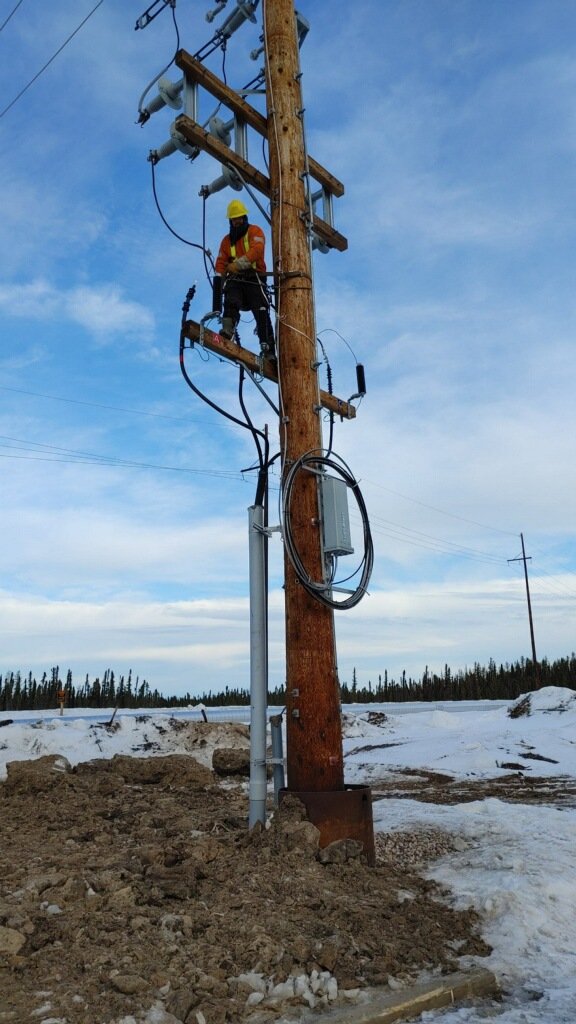
From Apprentice to Journeyperson: Building the Next Generation — field photograph
PLT MAGAZINE · FROM THE FIELD

Every fall, storm readiness moves from planning to reality. Mobilizations get faster, daylight shrinks, road conditions change, and restoration windows tighten. In that pressure, the industry’s “career” conversation stops being an HR topic and becomes an operational one: the next generation has to be ready—safely—before the system demands it.

In Canada, the most common shared reference point for what a competent Powerline Technician does is the Red Seal Occupational Standard (RSOS), developed by trade representatives and recognized by the Canadian Council of Directors of Apprenticeship (CCDA). It describes the scope of the trade and the work activities a ticketed PLT is expected to perform across the country. (www.red-seal.ca)

But an RSOS alone doesn’t produce a journeyperson. People do—through training systems, supervision, feedback, and day-to-day mentoring decisions made in yards, on tailboards, and at the end of a long shift when it would be easier to “just get it done.” This article looks at the progression from apprentice to journeyperson as a build process: what needs to be in place for safe capability to stack, especially going into fall operations and storm work.

Start with a shared definition of competence

One practical advantage of Red Seal is that it gives the trade a common national vocabulary: tasks, major work activities, and the idea that mobility matters. Red Seal also provides exam information and a standard structure that provinces and territories align with in different ways. (red-seal.ca)

For leaders and trainers, the key question isn’t “Are we following the RSOS?” but “Are we building the capabilities the RSOS assumes?” The RSOS describes routine occupational skills, planning, documentation, and hazards awareness—plus explicit expectations around supporting apprentices and learners. (red-seal.ca)

Practical takeaway for crews: Use the RSOS language as a consistent checklist for what exposure an apprentice is actually getting. Not just whether they’ve been on a job, but what they did, what decisions they owned, what hazards they identified, and what protections they worked under.

The “four-year” pathway is real—but it’s not the whole story

Across Canada, apprenticeship programs commonly reflect a multi-period structure that blends on-the-job training with technical training. In Alberta, for example, apprenticeship information describes a four-year term and sets out minimum on-the-job and in-class requirements by year. (alis.alberta.ca)

In other jurisdictions, trade profiles similarly emphasize the outdoor, all-weather reality of the work and note that PLTs may progress into senior, supervisory, planning, safety, technical support, or system control roles. (www.gov.nl.ca)

Those structures matter because they set expectations for:

  • Cadence: time blocks where apprentices should progress from observation to assisted performance to independent performance under supervision.
  • Coverage: ensuring apprentices see more than one “comfort zone” (e.g., distribution construction, maintenance, switching environments, restoration, and job planning/prints).
  • Documentation: recording tasks, competencies, and sign-offs in a way that is consistent with the apprenticeship authority’s rules.

However, the pathway’s success depends on what happens in between the periods: the coaching habits of journeypersons, the job selection decisions made by forepersons, and whether the organization makes room for deliberate learning without compromising system needs.

Mentorship: not a nice-to-have—an operational control

Mentorship in line work is often described informally: “watch, then do.” What’s changing is the environment around that tradition. Technology shifts, system complexity, and storm intensity all increase the number of scenarios a new PLT must be ready for. Sector organizations have been explicit that training effectiveness impacts a PLT’s ability to work safely and adapt to new technology. (ehrc.ca)

At an industry level, Electricity Human Resources Canada (EHRC) positions itself as a source of labour market insights and career development tools, including a national mentorship matching tool (MentorJunction). (ehrc.ca)

For employers: treat mentorship like any other critical process: define it, train it, and measure it. A mentor program doesn’t need to be complicated, but it should be explicit about expectations such as:

  • Consistency: where possible, keep an apprentice with a small pool of mentors long enough to build shared language and trust.
  • Progression: agree on what “ready for the next step” looks like (e.g., pre-job planning participation, hazard identification, equipment setup checks, material handling, and documentation routines).
  • Feedback: short, structured debriefs—especially after near-misses, changing conditions, or restoration work—so lessons don’t evaporate with fatigue.

For journeypersons: mentorship is also self-protection. An apprentice who understands the “why” behind limits and protections is less likely to improvise under pressure. The RSOS recognizes that the work presents risks to the worker, the public, and the system—and it frames planning and documentation as part of how PLTs organize work. (red-seal.ca)

Build storm capability before the storm

Storm work is where gaps show up. That’s not criticism—it’s physics, weather, and workload. The risk is when a crew’s training pipeline relies on storms as the primary teacher.

From a Canadian emergency management perspective, government framing emphasizes prevention/mitigation, preparedness, response, and recovery—language that also maps cleanly onto how utilities should build workforce readiness. (www.publicsafety.gc.ca)

So what does “preparedness” look like for apprentice-to-journeyperson progression in the fall?

1) Pre-storm role clarity for apprentices

Before peak season, leaders can define what apprentices may do (and under what supervision), where they’ll be positioned in the restoration organization, and how communications and escalation will work. This is not a substitute for employer procedures or jurisdictional rules—it’s an organizational readiness step so nobody is making up roles at 2 a.m.

2) Repetition on the fundamentals that storms stress-test

Storms make basics harder: travel, fatigue management, documentation discipline, public interface, traffic control, switching coordination, and material handling. The RSOS emphasizes planning work using documentation, codes, standards, and regulations, and it also identifies tasks such as determining lift types and recognizing hazards and limitations. (red-seal.ca)

3) After-action learning that actually sticks

Post-storm debriefs shouldn’t just be for supervisors. They are a mentorship accelerator—if apprentices are invited to talk through what they saw, what confused them, and what they’d do differently next time. Capture those lessons and feed them into technical training support, which the RSOS recognizes as part of supporting apprentices’ progress. (red-seal.ca)

Mutual assistance is also a development environment

In many regions, storm response involves mutual assistance. In Ontario, Electricity Canada describes the Ontario Mutual Assistance Program (OnMAG) as a single point of contact for utilities to request and offer assistance resources during damaging events, with member coordination and regular meetings that share storm restoration experiences and lessons learned. (www.electricity.ca)

For workforce development, this matters because mutual assistance brings together different systems, work methods, and local rules. That can be a great learning environment—if orientation, supervision expectations, and communication norms are clear. Apprentices can benefit from exposure, but only when host/visitor responsibilities are well-defined and consistent with the employer’s and jurisdiction’s requirements.

Progression isn’t just hours—it’s breadth and judgment

Apprenticeship programs necessarily track time and completion requirements, but field readiness is also about breadth and decision-making. One of the most common traps in progression is creating a “one-job apprentice”—highly competent at a narrow set of tasks, but underexposed to planning, prints, switching environments, or restoration complexity.

To counter that, many organizations use some form of rotation. A simple, practical model is to map assignments to three buckets:

  • Core construction and maintenance: work that builds foundational tool use, materials handling, and safe routines.
  • System operations exposure: job planning, documentation discipline, and coordination (as allowed by employer and jurisdictional practice).
  • Restoration readiness: controlled exposure to changing conditions, public interface, and time pressure—paired with strong supervision and debrief.

When rotations are hard to schedule, managers can still create “breadth” by deliberately assigning apprentices small ownership areas within a job: site setup checks, tool and material staging verification, documentation preparation, or a structured walk-around hazard review—always consistent with employer procedures and the crew’s work protection approach.

What good mentorship looks like on a hard day

Mentorship is easiest when the schedule is light. The real test is fall operations: shorter days, more call volume, and the temptation to shortcut learning conversations. “Good mentorship on a hard day” often looks like:

  • Two-minute expectation-setting before the task starts (what right looks like, what to watch for, when to stop and ask).
  • Active verification rather than passive assumption (apprentice repeats back the plan; mentor checks understanding).
  • One learning point after the task (what went well, what could improve next time, what to review before the next similar job).

None of this replaces formal training, employer procedures, or jurisdictional requirements. It simply builds the habits that keep an apprentice inside the safe boundaries of the work while they accumulate competence.

A note for apprentices: own your progression without overreaching

If you’re an apprentice, you’re balancing two truths at once: you need reps to grow, and you must never “prove yourself” by stepping outside training, supervision, or procedures. A productive approach is to come to work with a short list of goals you can safely pursue:

  • Ask for context: “What’s the risk we’re controlling here?”
  • Ask for a role: “Can I take ownership of staging/material verification/documentation prep under your direction?”
  • Ask for feedback: “What should I tighten up before the next one?”

Also, learn the structure of your jurisdiction’s apprenticeship expectations and how Red Seal endorsement is achieved through completion and the interprovincial exam. Job Bank and Red Seal resources provide high-level descriptions and exam details, while your provincial/territorial apprenticeship authority provides the binding requirements. (on.jobbank.gc.ca)

The bottom line

Storm readiness is not only about poles, wire, and trucks—it’s about whether the workforce can scale safely when conditions degrade. The path from apprentice to journeyperson is where that resilience is manufactured.

If the industry wants more capable ticketed PLTs five years from now, the work starts today: aligning field exposure to a common occupational standard, treating mentorship as an operational control, and making fall operations a deliberate development season rather than an accidental trial by fire. (www.red-seal.ca)

OPERATIONS

Fall Operations: Preparing Equipment, Crews and Worksites

In most regions, the operational shift from late summer into fall is not a single “switch,” but a widening band of changing conditions: shorter days, freeze–thaw cycles, saturated ground, first snow, early ice, and the first sustained periods where wind and cold combine into meaningful wind chill.

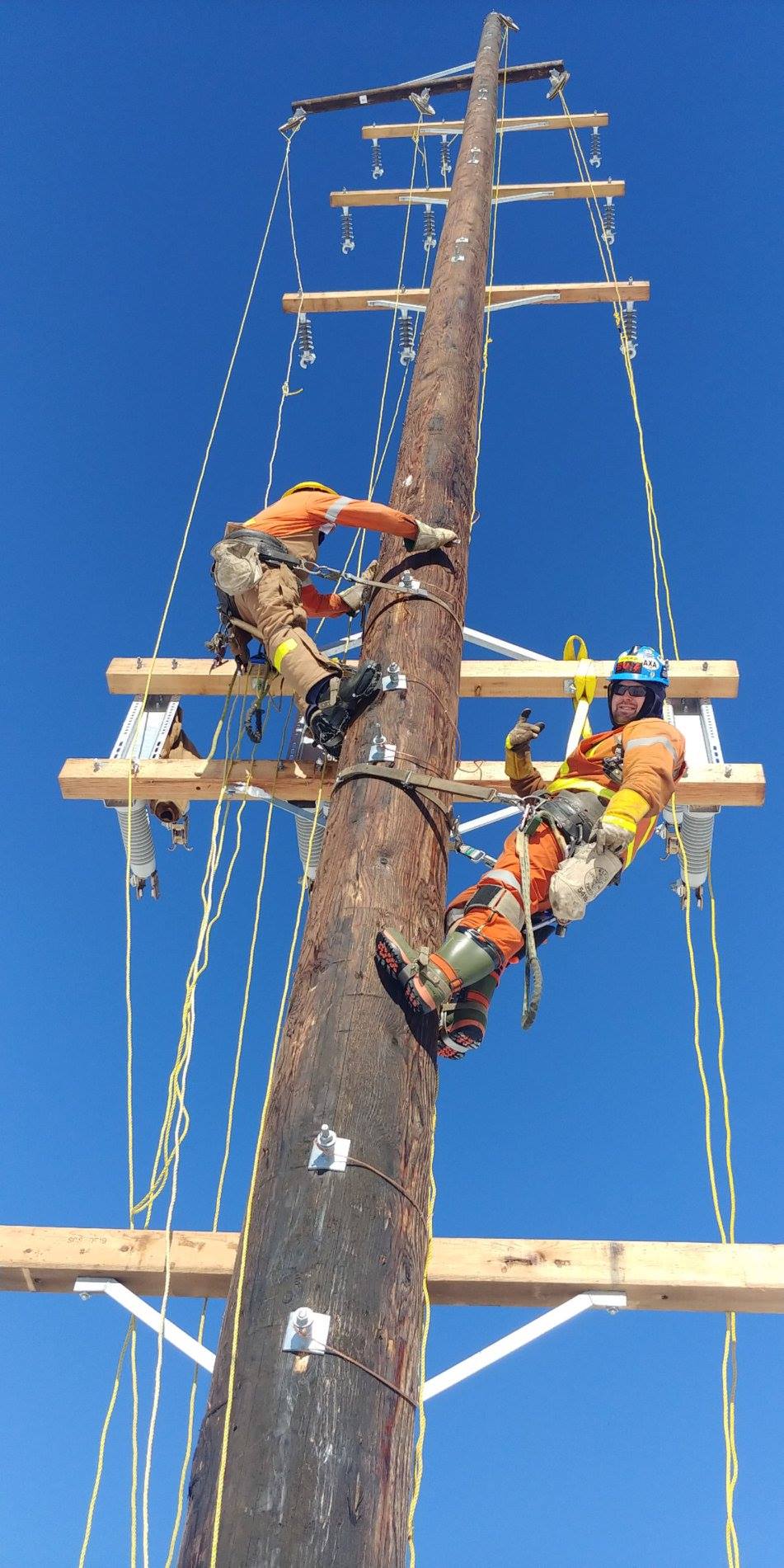
Fall Operations: Preparing Equipment, Crews and Worksites — field photograph
PLT MAGAZINE · FROM THE FIELD

In most regions, the operational shift from late summer into fall is not a single “switch,” but a widening band of changing conditions: shorter days, freeze–thaw cycles, saturated ground, first snow, early ice, and the first sustained periods where wind and cold combine into meaningful wind chill. Those changes influence everything from access planning and traffic control to glove dexterity and the reliability of portable tools.

Fall readiness is not only about winter gear. It’s about anticipating how quickly a normal worksite can become a high-friction environment—literally (slips on wet leaves or frost) and operationally (delays, reduced visibility, and increased fatigue). Environment and Climate Change Canada (ECCC) notes that wind chill is used to communicate frostbite risk when it’s windy and below 0 C, and that forecasts may include frostbite information when wind chill is cold enough. That has planning implications for job duration, warm-up strategy, and supervision cadence when conditions deteriorate mid-shift.

1) Start with fall-specific hazards: the “shoulder season” trap

Fall can feel mild at the truck, while elevated work positions and exposed corridors experience markedly different wind and temperature. The most common fall-to-winter hazard pattern is a series of small degradations that stack: wet surfaces + lower sun angle glare + earlier darkness + cold hands + bulky layers + time pressure as daylight disappears.

Key weather-driven hazard changes to account for in pre-job planning:

  • Wind chill and cold injury potential. ECCC’s wind chill index is intended to convey the combined cooling effect of wind and cold, and ECCC provides guidance on wind chill hazards and frostbite risk categories. CCOHS also points employers and workers to wind chill resources and highlights that cold-stress guidance is often informed by ACGIH Threshold Limit Valuesa0(TLVs) used by some Canadian jurisdictions where specific limits are not prescribed.
  • Freezea0a0thaw cycles. Daytime melt and overnight freeze can create black ice at access points, yards, and on equipment steps/handholds, changing slip potential daily.
  • Cold precipitation and first snow. Early-season snow is often wet and heavy, affecting access roads and causing rapid contamination of boot soles and ladder rungs.
  • Reduced daylight and low-angle sun. Lighting and visibility become operational constraints earlier in the day, affecting spotting, backing, and work positioning.

2) Crew readiness: cold changes performance before it changes comfort

Most crews recognize frostbite and hypothermia as serious outcomes, but fall operations also create subtler performance risks: reduced dexterity, slower fine-motor tasks, and more frequent glove changes due to wetting. Cold exposure management is therefore both a health protection and a quality/efficiency control.

Practical crew-readiness actions to emphasize in the fall transition:

  • Revisit cold-stress planning assumptions. CCOHS notes that where specific exposure limits are not set, guidelines can be used to assess hazards, create safe work plans, and monitor conditions. Build “go/no-go” decision points into tailboards for wind chill, precipitation type, and visibility—aligned to your employer and jurisdictional requirements.
  • Warm-up and shelter logistics. Alberta OHS materials on working in extreme temperatures highlight the need for worksite practices in extreme cold; while provincial guidance varies, the operational principle is consistent: a plan for warming, drying, and recovery time should exist before the work begins.
  • Hydration and fatigue. Cold reduces thirst signaling, while layered clothing increases sweat retention. Supervisors should watch for fatigue and cognitive slowdown—especially in extended outage restoration shifts.
  • Competency refresh. Fall is a strong window to refresh seasonal competencies: vehicle spotting in low visibility, winter driving policies, rescue drills with bulkier clothing, and any utility-specific storm restoration procedures.

3) PPE and clothing: layering without compromising protection systems

Fall is when many crews begin mixing base layers, mid-layers, rain gear, and cold-weather outerwear. That can create compatibility issues, especially where arc-rated systems, rubber insulating gloves, and fall protection harness fit are involved.

For electrical work, Canadian workplaces commonly reference CSA Z462 (Workplace electrical safety) for hazard identification and PPE selection practices; CCOHS also identifies CSA Z462 and CSA Z463 (maintenance of electrical systems) in its overview of standards relevant to arc flash/electrical safety. The key fall message is not “buy more gear,” but “confirm the system still works together” when bulk, moisture, and reduced dexterity enter the picture.

  • Layering compatibility. Ensure added layers do not interfere with harness fit, lanyard routing, or the ability to visually inspect connectors and closures. Consider how rain shells and insulated garments interact with task-specific PPE requirements and your employer’s energized work rules.
  • Glove management. Wet gloves and cold hands are a common fall constraint. Plan for more frequent glove changes, drying strategies, and protected storage—without improvising outside manufacturer or employer procedures.
  • Visibility gear. Shorter days and storm response increase the importance of visibility and lighting. Confirm reflective PPE is not obscured by outer layers.

4) Equipment readiness: prevent small failures from becoming storm-day failures

Fall is the time to remove “summer assumptions” from fleet and tool readiness. Batteries lose performance in cold; hydraulic systems and lubricants behave differently; and access conditions become less predictable.

Fleet and access equipment

  • Daily access reality checks. A road that was stable in August can become rutted and soft in October, then icy in November. Build a formal trigger for reassessing access routes after heavy rain or overnight freezes.
  • Stowage and contamination control. Wet leaves, mud, and road salt introduce slip and corrosion risk. Emphasize housekeeping around steps, decks, and work platforms.

Ladders, steps, and climbing interfaces

Even in utility work where ladders are not the primary access method, they appear in substations, buildings, and certain field scenarios. IHSA winter-focused safety messaging highlights practical slip prevention: removing ice and snow from boot soles and recognizing how winter conditions amplify working-at-heights risks. Their ladder guidance also emphasizes maintenance and safe setup practices, which become more critical when surfaces are icy or uneven.

  • Inspect and de-ice climbing interfaces. Confirm rungs/steps are free of ice buildup and that feet/soles are clear of snow and ice before climbing.
  • Verify ground conditions. Ladder feet and outriggers can behave unpredictably on frost, wet leaves, and frozen gravel.

Tools and power systems

  • Battery and charging plans. Cold affects battery performance and charging behavior; ensure crews have an approved plan for keeping batteries within operating temperature ranges according to manufacturer requirements.
  • Lighting. Short days turn lighting into a production-critical tool. Confirm area lights, headlamps, and vehicle scene lighting are present, functional, and matched to the work (glare control, beam pattern, spare units).

5) Worksite setup: fall changes traction, visibility and public interface

Worksite controls that were “good enough” in summer may be inadequate in fall, especially for roadside work in rain, fog, or early darkness. Additionally, storm season increases public interaction and emergency response frequency.

Ontario’s Electrical Safety Authority (ESA) emphasizes a core public-safety rule: always assume a downed powerline is energized and deadly. While that message is aimed at first responders and the public, it is also a reminder for crews that fall storm response can increase exposure to unknown contacts, compromised grounds, and chaotic scenes—demanding disciplined boundaries and communications.

  • Traffic control and visibility. Recheck sign placement, advance warning distances, and illumination as daylight fades earlier.
  • Ground condition controls. Add traction aids or surface treatments per employer policy; designate slip-risk zones (mud, wet leaves, frost patches) during tailboards.
  • Scene control during outages. Plan for public curiosity and responder interface. Align roles: who speaks to responders, who controls the perimeter, who documents hazards.

6) Fall readiness checklists (field-friendly)

Supervisor/foreman: 10 fall-transition prompts

  • Weather check with thresholds. Record temperature, wind, precipitation type, and wind chill where applicable; set escalation triggers for warm-up cycles or schedule changes (per employer/jurisdiction requirements).
  • Daylight plan. Identify the “darkness time” for the work area and confirm lighting/finish strategy.
  • Access confirmation. Validate roads/ROW access after rain and before freeze-up; pre-plan alternates.
  • Equipment housekeeping. Steps, decks and platforms cleared; stowage prevents wet PPE/tool contamination.
  • Battery and tool readiness. Charging strategy, spares, and storage temperature plan confirmed.
  • PPE system check. Layering does not compromise harness fit, mobility, or task-specific protection.
  • Slip/trip controls. Identify and mark high-risk zones; confirm traction measures.
  • Communications. Radios/phones working; storm-response contact tree current.
  • Emergency response plan. Rescue considerations with bulkier clothing; access for EMS in deteriorating roads.
  • Stop-work reinforcement. Reconfirm authority and conditions that trigger pause/reassessment.

Crew: pre-climb / pre-lift micro-check (60 seconds)

  • Boot soles clear of snow/ice; gloves appropriate and dry enough for the task.
  • Hands/controls: can you operate latches, carabiners, and connectors without forcing?
  • Contact points: rungs/steps/handholds visibly clear; no hidden frost glaze.
  • Visibility: can the spotter see you and can you see the spotter (lighting, fog, glare)?
  • If conditions have shifted since tailboard (wind pickup, freezing rain onset), stop and re-brief.

7) The fall mindset: operational discipline before the first big storm

Storm readiness is often discussed as a logistics challenge—mutual aid, materials, staging, and restoration priorities. But fall operations readiness is also about preventing everyday injuries and quality failures that quietly drain capacity right when the system needs it most.

Use fall as the “systems check” season: validate that clothing systems, lighting, access planning, and cold-stress controls are practical in real conditions. When the first freezing rain event or heavy wet snow hits, you don’t want to discover that your ladder interface ices up, your glove plan fails, or your scene lighting creates glare for traffic control.

Reminder: This article provides general operational considerations. It does not replace your employer’s procedures, utility rules, jurisdictional OHS requirements, or manufacturer instructions.

SAFETY

Safety Culture Is Built Before the Tailboard

In the powerline trade, we talk about “the tailboard” as if it’s the moment safety culture shows up.

Safety Culture Is Built Before the Tailboard — field photograph
PLT MAGAZINE · FROM THE FIELD

In the powerline trade, we talk about “the tailboard” as if it’s the moment safety culture shows up. But the truth most seasoned forepersons already know is simpler: the quality of the tailboard is downstream of everything that happened before it—how the job was planned, what information was shared, what the company rewards, how the leader responds to bad news, and what the crew believes will happen if someone raises a concern.

Storm readiness, fall operations, and restoration work put that reality on full display. Long hours, shifting priorities, changing hazards, public pressure, supply constraints, and unfamiliar circuits don’t just raise risk—they stress-test a company’s planning discipline and leadership habits.

This article focuses on what employers, supervisors, and crew leads can do before the tailboard so the briefing becomes a confirmation of readiness—not a last-minute attempt to manufacture it. Nothing here replaces your utility or contractor procedures, jurisdictional regulation, or manufacturer instructions. Treat it as a culture-and-planning checklist to strengthen how you run work.

What a tailboard is (and what it isn’t)

Canadian Centre for Occupational Health and Safety (CCOHS) describes safety talks—often called toolbox talks, safety briefings, or tailgate meetings—as short, focused meetings on a specific health and safety topic, valuable for reinforcing safe work habits when used as part of a broader program (not as a replacement for formal training). (www.ccohs.ca)

That framing matters in line work. A tailboard is not a magic eraser for missing switching details, unclear roles, shaky hazard controls, or misaligned expectations. In storm work, the tailboard can also become a “checkbox” ritual if the crew already believes the plan is unrealistic or the schedule is immovable.

If you want tailboards that actually change outcomes, start by treating them as a verification point inside a planning system—one that reliably delivers the right information, the right equipment, the right competencies, and the right controls to the jobsite.

Planning is hazard control (especially in storms)

In restoration, the job plan often changes faster than paperwork can keep up. That’s exactly why the planning habits that exist before storm season become decisive during it.

Energy Safety Canada’s electrical safety program guidance highlights pre-job safety planning elements such as completing a risk assessment related to the work task and using recognized checklists/standards to support pre-job briefing and planning. (www.energysafetycanada.com)

Meanwhile, CSA Z462 public materials point to the expectation that an electrical safety program include risk assessment procedures and that job safety planning and job briefing are part of the framework. (publicreview.csa.ca)

For powerline leaders, the takeaway is practical: planning is a primary control. It’s how you reduce exposure before PPE and work techniques even enter the picture. In storm conditions, good planning also reduces “cognitive overload”—the mental clutter that leads to skipped steps, assumptions, and miscommunication.

Three “before-the-tailboard” planning behaviours that pay off in fall operations

  • Make the plan visible early: deliver job packets, switching intents, hazard notes, and site constraints early enough that the crew can challenge them. The goal is not perfection; it’s time for questions.
  • Plan around change: assume access, weather, circuit status, and scope will change. Build a re-brief trigger list (examples below) so you’re not debating “do we need to stop and talk?” when the pressure is on.
  • Pre-assign roles and decision rights: “who decides” is part of hazard control. When restoration gets hectic, ambiguity about who calls the stop can become the hazard.

Leadership sets the ceiling for honesty at the tailboard

Most crews can spot the difference between a briefing that invites input and one that’s just a speech before the truck doors slam. The cultural question is: What happens when someone says the plan won’t work?

Safety talks work best when they are relevant, timed close to the task, and integrated into a broader program—CCOHS emphasizes they complement formal training and should fit the work and conditions. (www.ccohs.ca)

In restoration, relevance means the leader is willing to surface uncomfortable realities:

  • We’re fatigued and the shift is long.
  • We’re short a piece of gear or the right material.
  • We’re in an area with public interference or traffic complications.
  • We’re working with unfamiliar plant, unusual configuration, or incomplete information.

When leaders treat these as “complaints,” the crew learns to stay quiet—and the tailboard becomes theater. When leaders treat them as planning inputs, the crew learns that speaking up is part of the job.

Two leadership moves that raise the quality of every tailboard

  • Reward the first dissent: the first person to identify a mismatch between the plan and the field should be thanked publicly. That one moment can set the tone for the whole day.
  • Separate urgency from shortcuts: restoration is urgent. But if urgency consistently equals “skip the controls,” you’re training your workforce to take risk on command.

Crew expectations: from values to observable behaviours

Many organizations say “safety is our priority.” Line crews judge safety culture by what is tolerated on the hard days. The strongest safety cultures translate values into crew expectations that can be seen and coached.

Try expressing expectations as behaviours that a peer could verify:

  • Stop-work is normal: anyone can call a stop when conditions change or controls aren’t in place.
  • We re-brief on change: if the job scope, location, circuit status, access, weather, or the work method changes, we pause and reset the plan.
  • We match the job to competence: task assignments consider qualification, currency, and familiarity with the specific work (not just “years in the trade”).
  • We do not normalize broken layers: missing barriers, unclear switching, incomplete documentation, or “we’ll figure it out there” is a trigger to slow down and escalate.

These expectations help crews self-correct without waiting for a supervisor to notice.

Make the tailboard shorter by doing more work beforehand

One reason tailboards drift into long, repetitive meetings is that they’re being used to compensate for planning gaps. Instead, aim for a briefing that is short because it’s focused: confirm the plan, confirm the hazards, confirm the controls, confirm roles, confirm communications, confirm re-brief triggers.

Energy Safety Canada’s guidance points employers toward structured pre-job planning and risk assessment as part of an electrical safety program. (www.energysafetycanada.com)

And CSA Z462 public review materials indicate that job safety planning and job briefing sit alongside risk assessment procedures within workplace electrical safety program expectations. (publicreview.csa.ca)

For fall operations and storm readiness, that suggests an operational improvement target: shift complexity left. Do the heavy thinking earlier in the process so the crew’s morning energy is spent verifying and adapting, not inventing the plan at the tailgate.

Practical “pre-tailboard” inputs that improve field execution

  • Minimum job package standard: what must be known before wheels roll (maps, switching intent, access constraints, contact list, special hazards, customer sensitivities).
  • Material readiness check: confirm critical components, temporary supplies, and backup options before dispatch, not after arrival.
  • Fatigue plan: define break triggers, relief arrangements, and “no-go” thresholds for extended restoration periods.
  • Public interface plan: traffic control approach, signage, spotter roles, and what to do when the public crosses the line.

Re-brief triggers: decide before you’re under pressure

Storm work is a string of changes. The question isn’t whether conditions will shift; it’s whether the crew has an agreed, non-negotiable list of changes that force a pause.

Below is a generic set of re-brief triggers to adapt to your procedures:

  • Scope change: the job turns from repair to replacement, or from distribution to customer service equipment, etc.
  • Circuit status change: planned de-energized work becomes energized, or the clearance/hold status changes.
  • Work method change: different approach, different access, different equipment, or different temporary configurations.
  • Environmental change: wind increases, lightning approaches, visibility drops, ground conditions degrade, flooding/ice presents new hazards.
  • Crew change: relief arrives, people rotate, new operator joins, or a key competent person leaves the site.
  • Near miss / close call: any event that creates a “that was close” moment is an automatic pause-and-reset.

Deciding these triggers in advance reduces debate in the moment—and makes the tailboard a living tool, not a morning-only ritual.

For employers and leaders: audit what’s happening “upstream”

If your tailboards aren’t effective, resist the temptation to “train the tailboard” first. Look upstream. Use your next storm response or fall operations cycle to review what information and support was missing at the point of work.

CCOHS emphasizes that safety talks are most effective when they fit the conditions and complement the broader health and safety program. (www.ccohs.ca)

So treat tailboard quality as a measure of system health. If briefings are rushed, vague, or one-way, it may indicate the plan arrived late, roles were unclear, risk assessment wasn’t practical, or leaders believe schedule pressure outranks field reality.

Three upstream questions to ask after a tough day

  • What did the crew learn only after arrival? (access, plant condition, customer constraints, hazards)
  • What control depended on “remembering” instead of a system? (a checklist, a standard, a pre-dispatch confirmation)
  • What did we unintentionally reward? (speed over clarity, silence over questions, improvisation over escalation)

The bottom line

Storm readiness isn’t only about trucks, stock, and mutual aid. It’s also about whether your planning and leadership culture can keep work controlled when everything around the job is changing.

When safety culture is built before the tailboard—through clear expectations, earlier planning, honest leadership, and defined re-brief triggers—the briefing becomes what it was meant to be: a short, relevant, crew-owned check that the job is truly ready to execute.

EMPLOYER

Employer Spotlight: Building and Retaining a Strong Line Crew

Fall operations are when many employers feel the workforce reality most sharply: new hires are trying to find their footing, the experienced hands are bracing for storm response, and planners are trying to balance preventive work with whatever the weather decides to deliver.

Employer Spotlight: Building and Retaining a Strong Line Crew — field photograph
PLT MAGAZINE · FROM THE FIELD

Fall operations are when many employers feel the workforce reality most sharply: new hires are trying to find their footing, the experienced hands are bracing for storm response, and planners are trying to balance preventive work with whatever the weather decides to deliver. In Canada’s electricity sector, the labour conversation is no longer a “future problem.” Electricity Human Resources Canada (EHRC) labour-market work has been consistently flagging recruitment and retention pressure, driven by retirements, turnover, and competition from other sectors—at the same time the country is trying to expand and modernize the grid. (ehrc.ca)

This Employer Spotlight is written for the people who build crews: utility and contractor leaders, supervisors, safety and training teams, and HR partners. The goal is practical and actionable, not theoretical—and not a substitute for your organization’s procedures, collective agreements, or jurisdictional requirements.

1) Start with an honest value proposition: the “employer of choice” test

EHRC’s recent research on positioning the electricity sector as an employer of choice points to a reality many supervisors already hear in interviews and exit chats: candidates and workers weigh compensation, work-life balance, advancement opportunities, and safety culture—often as a package. (ehrc.ca)

In linework, the employer value proposition is not a poster on the wall. It shows up in everyday decisions: who gets mentored, how overtime is managed, whether storms are staffed in a way that protects recovery time, and whether the crew believes the company will back them when they stop a job for safety.

What employers can do now:

  • Translate “mission” into specifics. Candidates understand reliability, public safety, and restoring power after storms. Make the role concrete: what a first-year apprentice actually does, what good progression looks like, and what support exists when the work gets hard.
  • Be transparent about the hard parts. Travel, shift work, storm callouts, and physically demanding conditions can be a selling point to the right person—but only if you’re honest and match the reality on day one.
  • Build a visible safety narrative. Prospective employees often ask about safety and qualifications. (ehrc.ca) Don’t oversell. Instead, show how competence is built (training, mentoring, supervision) and how work is planned and authorized in your environment.

2) Treat the apprenticeship pathway as a product you must deliver well

Powerline Technician is a Red Seal trade with a national occupational standard and exam structure. (www.red-seal.ca) Employers don’t control every element of apprenticeship, but they do control the experience that determines whether a capable person stays long enough to become a journey-level worker.

Across Canada, the details vary by province/territory, but the system logic is consistent: the employer’s on-the-job training, the apprentice’s logbook/progression, and technical training delivered by recognized training providers all have to align. In Ontario, for example, organizations like IHSA and MEARIE are deeply embedded in delivering Powerline Technician apprenticeship/technical training (with employer registration and documentation requirements called out in their materials). (www.ihsa.ca)

What employers can do now:

  • Map the apprentice journey like you would a storm plan. Identify the “failure points” (long waits for seats in technical training, inconsistent mentoring, mismatched work opportunities that slow logbook completion). Fixing these is retention.
  • Standardize mentoring expectations. A mentor program fails when it’s “whoever’s available.” Define what good looks like: daily briefings, job walkdowns, after-action debriefs, and a consistent approach to competency sign-off (within your rules and collective agreement).
  • Protect learning time during shoulder seasons. Fall can become a grind of prep work plus overtime. If an apprentice’s only role is “extra hands,” your pipeline becomes a revolving door. Plan for structured exposure to core tasks so apprentices see progress.

3) Recruitment: widen the top of the funnel without lowering the bar

When employers say “no one wants to work,” the more accurate statement is usually: “the people we need have options.” EHRC’s Labour Market Intelligence work emphasizes that the electricity sector must be proactive and innovative in recruitment while maintaining job quality and building the skills needed for the work. (ehrc.ca)

Widening the funnel is not about relaxing standards that protect workers and the public. It’s about removing avoidable friction and being more intentional about where candidates come from and how they’re assessed.

What employers can do now:

  • Build pre-hire clarity around requirements and timelines. Red Seal and apprenticeship structures can be confusing to outsiders. Use simple language: typical progression, required technical training, and what “time to competence” realistically means.
  • Partner with reputable training and sector organizations. In Ontario, for instance, apprentices access structured technical training through established delivery agents and trade programs (e.g., IHSA Powerline Technician Apprenticeship Training; MEARIE Powerline Technician levels). (www.ihsa.ca)
  • Target adjacent experience pools. Labourers and operators who already thrive outdoors, in traffic control environments, or in utility construction often have the stamina and safety mindset you need. Don’t assume you can only hire “finished” talent.
  • Use realistic job previews. A short ride-along equivalent (where permitted), yard tour, or “day-in-the-life” briefing reduces early attrition by aligning expectations.

4) Retention is built in the day-to-day: schedule design, respect, and progression

Linework employers can’t eliminate storms, but they can eliminate avoidable burnout. Retention improves when workers feel three things: (1) they are safe and supported, (2) their time and family life are respected, and (3) their career is moving somewhere.

EHRC’s sector-wide labour work underscores that shortages and turnover are real constraints and that a broader human resources strategy is required—one that protects work quality and ensures training and skills. (ehrc.ca)

What employers can do now:

  • Make advancement visible. Publish what progression looks like: apprentice milestones, crew lead pathways, foreperson/supervisor development, and specialist tracks (e.g., underground, rubber glove/live-line roles where applicable in your system).
  • Codify fair access to overtime and premium work. Perceived favoritism drives exits. Even when the rules are clear, communication often isn’t.
  • Invest in the “middle”—forepersons and crew leads. This group is the retention hinge: they translate policy into the lived experience. Give them practical leadership training, job-planning support, and authority matched to accountability.
  • Do stay interviews, not just exit interviews. Ask your top performers what would make them leave. Then act on one or two changes per quarter that people can see.

5) Training and safety culture: don’t confuse certification with competence

Storm readiness puts training quality on display. Under pressure, a crew falls back to habits. Employers who retain strong crews tend to be the ones who build consistent habits: job planning, communication, and controlled execution.

Canada’s formal trade structures (e.g., Red Seal occupational standards and exam weighting) provide an important backbone. (www.red-seal.ca) But employers still need local competency systems: what “qualified” means for specific tasks on specific assets, with the right supervision, in the right conditions.

What employers can do now:

  • Create a competency matrix tied to your work types. Don’t overcomplicate it. Start with the most common tasks in fall and storm periods: switching support (as applicable), pole change-outs, conductor repair, traffic control coordination, restoration triage, and customer-facing safety.
  • Use training providers strategically. Where your jurisdiction uses external training delivery agents (e.g., IHSA’s Powerline Technician Apprenticeship Training in Ontario), treat those sessions as part of a larger plan—pre-work before the course, structured skill application after the course, and documented coaching. (www.ihsa.ca)
  • Run post-storm after-action reviews that include apprentices. Capture lessons on logistics, communications, job package quality, material staging, and fatigue management. Then feed those lessons into refresher training and pre-storm briefings.

6) Mobility, recognition, and the “Canadian workforce” reality

One retention lever that is often overlooked is how an employer supports a worker’s long-term portability without making them feel like they must leave to grow. Red Seal structures exist to support common standards and interprovincial mobility. (red-seal.ca)

Employers can turn this into a strength: “You can build a career here that’s recognized broadly—while still being supported locally.” The practical angle is simple: help apprentices and journey-level workers understand the credential path, exam expectations, and how technical training seats and scheduling work in your jurisdiction.

7) A fall operations checklist for employers (workforce edition)

Use this as a conversation starter with operations, training, safety, and HR—not as a one-size-fits-all program.

  • Recruitment pipeline: Do we have defined intake windows for apprentices/ground workers? Do applicants know the pathway and timeline?
  • Apprentice progression: Are logbooks, technical training bookings, and field opportunities aligned for the next six months?
  • Mentorship capacity: Have we protected time for coaching, job briefs, and competence sign-off?
  • Fatigue and scheduling: What’s our planned approach to callout rotation and recovery time as storm season ramps up?
  • Training integration: After external training blocks (where applicable), do we have a structured plan for skill application and evaluation?
  • Retention signals: Have we done stay interviews with key performers in the last 90 days? What are we changing based on what we heard?

What a “strong crew” really looks like in October

In storm season, strong crews are not just the ones who can work fast. They are the ones who can plan, communicate, execute safely under pressure, and recover well enough to do it again tomorrow. Employers build that capability in the weeks and months before the storm—not during it.

Canada’s electricity workforce challenge isn’t solved by any single measure. The credible path forward is a stack of consistent choices: clear recruitment messaging, a well-managed apprenticeship journey, visible progression, investment in front-line leadership, and a safety culture that workers trust when the weather turns. EHRC’s labour-market intelligence frames the urgency. The rest is execution—yard by yard, crew by crew. (ehrc.ca)

TRAINING

Training That Transfers to the Field

Every fall, storm readiness puts training under a microscope. Long nights, cold hands, unfamiliar circuits, mutual-aid crews, and tight restoration windows expose a simple truth: training isn’t “credible” because it was delivered; it’s credible because it shows up in the field—under pressure—without crews improvising fundamentals.

Training That Transfers to the Field — field photograph
PLT MAGAZINE · FROM THE FIELD

Every fall, storm readiness puts training under a microscope. Long nights, cold hands, unfamiliar circuits, mutual-aid crews, and tight restoration windows expose a simple truth: training isn’t “credible” because it was delivered; it’s credible because it shows up in the field—under pressure—without crews improvising fundamentals.

In the powerline world, “training that transfers” is not a soft concept. It’s measurable. It’s the difference between a worker who can repeat steps in a classroom and a worker who can plan, communicate, recognize hazards, and execute within the employer’s rules and the job’s constraints. And it’s the difference between an employer who can point to attendance sheets and an employer who can demonstrate competency, supervision, and continuous reinforcement of the organization’s work practices.

1) Start with a hard line: standards and law point back to the employer

Field transfer begins with a clarity that sometimes gets lost in course marketing: even the best external training is only one input. In workplace electrical safety, CSA Z462 explicitly places responsibility on the employer to establish and implement safety-related work practices and to provide workers with training in those practices and procedures. That framing matters because it makes “transfer” an organizational obligation, not just an instructor’s goal.

For federally regulated workplaces, the Government of Canada’s guidance on employer and employee duties similarly emphasizes employer responsibilities around providing workers access to regulations and ensuring training where necessary. The specific requirements for electrical utility and construction work will still be provincial/territorial in many cases, but the principle is consistent: the employer owns the system that turns training into safe performance.

2) Credible training maps to the trade—then maps again to the job

In Canada, powerline training has an advantage: the trade is defined. The Red Seal program identifies Powerline Technician as the trade name and describes a harmonized structure that totals 7,200 hours of on-the-job and in-school training. For transfer, that’s a built-in compass: if a course can’t clearly point to the tasks and sub-tasks it supports, it’s harder to defend as “job-ready.”

The Red Seal Occupational Standard (RSOS) for Powerline Technician goes further by laying out a task matrix where a major portion of the trade relates to safety-related functions, hazard control, lockout/tagout, temporary grounding and bonding, work planning, worksite access, and live-line methods. This is a practical message for trainers: credibility is not only about teaching how to build—it's about teaching how to work safely, consistently, and communicatively in the environments where building happens.

But mapping to the trade is only step one. Storm readiness demands step two: mapping to your work. Distribution vs. transmission, underground vs. overhead, utility vs. contractor, and jurisdiction-specific switching/protection rules change what “good” looks like. The most transferable programs are explicit about what’s common-core and what is employer- or utility-specific—and they create structured handoffs so the employer can complete the job-specific portion.

3) Scenario practice beats “topic coverage” when the weather turns

Fall operations don’t fail because a worker forgot a definition. They fail when multiple risks stack up: fatigue, traffic exposure, cold, poor visibility, damaged infrastructure, urgent service restoration, and competing priorities. Training transfers when it intentionally reproduces that complexity in a controlled way.

Ontario provides a clear example of how scenario-based learning fits utility work. IHSA describes the Utility Work Protection Code (UWPC) as a system that reduces or eliminates hazards by making isolation and safe conditions clear through permits and tags. IHSA’s UWPC training is structured around detailed study and scenario work for those who issue permits and those who work under them, with recertification noted as a requirement. The credibility signal here is not the length of the course; it’s the deliberate practice of applying rules to situations, not just reading rules.

Even for workers who don’t need full code qualification, IHSA’s UWPC Overview concept points toward a transfer principle: tailor training to the decisions workers must make in the field. If the course content is mismatched to the actual responsibilities of the work group, pass/fail becomes a poor proxy for readiness.

4) Rescue is the litmus test: if you train at heights, you train the “what if”

Credible training is ruthless about the uncomfortable parts of the job. Rescue is one of them—because storms don’t schedule injuries, and suspension time is not a theoretical concern.

Provincial requirements vary, but regulators are clear that rescue planning belongs inside fall protection planning. Alberta’s OHS Code (Fall Protection) requires an employer to develop a fall protection plan in certain circumstances and that plan must specify rescue procedures if a worker falls and is suspended and needs to be rescued. The Code also requires workers be trained before being allowed to work where fall protection must be used, including emergency response procedures and practice of those procedures.

WorkSafeBC’s guidance on fall protection plans similarly expects written plans to specify rescue procedures for a suspended worker who cannot self-rescue, and highlights that rescue/evacuation considerations may still apply even when a formal fall protection plan is not required for the situation.

At the trade training level, the Nova Scotia Powerline Technician Apprenticeship Curriculum Standard includes detailed rescue competencies (pole top rescue using a bucket, tower rescue methods, bucket evacuation, and bucket rescue), reinforcing that rescue is a core capability that must be taught and practiced—not an afterthought.

The transfer takeaway: if your fall operations ramp up in October, and your training package can’t clearly show how rescue procedures are taught, practiced, evaluated, and refreshed, you have a credibility gap—no matter how impressive the equipment list looks.

5) Small classes and experienced instructors help—but only if the program proves competence

Workers will often describe “credible” training in human terms: instructors who have done the work, time for coaching, and a training yard that looks like the field. Those factors matter because they enable repetition, feedback, and correction before habits calcify.

IHSA’s profile of its powerline technician apprenticeship training describes small class sizes, an outdoor training yard with a variety of infrastructure and equipment, and instructors with significant industry experience. Those design choices support transfer because they increase hands-on time and allow instructors to teach not just steps, but reasons and consequences.

However, credibility can’t rest on reputation alone. For employers and training organizations, the question is: can you produce evidence of competency, not just participation? The best programs build assessment into performance: observed tasks, documented checklists, coaching notes, and clear thresholds for “ready for supervised field work” versus “ready for independent work.” That evidence becomes essential in storm season when staffing is tight and supervisors must make fast decisions about who can safely do what.

6) Work-integrated learning: the fastest path from “trained” to “effective”

Electricity sector workforce groups have been explicit that classroom learning needs structured pathways into real work. Electricity Human Resources Canada (EHRC) has emphasized work-integrated learning (WIL) as a key transition step from school to work—because it connects education to practice and helps prepare the next generation of electricity workers.

For storm readiness, WIL isn’t just a youth or recruitment topic. It’s an operating model: controlled exposure to real tasks with real standards, coached by competent mentors, and supported by a learning plan. It’s also a retention model, because workers gain confidence when the handoff from school to crew is designed rather than improvised.

7) A practical “transfer checklist” for fall storm readiness (without replacing your procedures)

Training leaders and operations managers don’t need more slogans—they need a way to audit training credibility quickly before the weather forces the issue. The following checklist is designed to be adapted to your employer/utility procedures, jurisdictional requirements, and manufacturer instructions.

Transfer Checklist: What to verify before crews go back to operations

  • Task alignment: Each module clearly maps to Red Seal RSOS tasks (or equivalent internal task standards) and to the specific work the crew will perform (distribution, transmission, underground, stations, etc.).
  • Decision practice: Workers practice decision points under scenario pressure (job planning, hazard identification, controls, communication, stop-work triggers).
  • Work protection literacy: Where applicable, workers understand how your switching/protection/work permit system functions, their responsibilities under it, and how to recognize when conditions are not as expected (for Ontario, UWPC-related role clarity is a strong example of this approach).
  • Rescue readiness: Rescue procedures are job- and site-relevant, practiced hands-on, and reviewed as part of fall protection planning (consistent with expectations reflected in Alberta and BC regulatory guidance).
  • Assessment evidence: You can show documented performance evaluations, not just course completion. Any gaps have a remediation plan.
  • Field reinforcement plan: Supervisors and journeyperson mentors know what was taught, what was assessed, and what must be reinforced during the first shifts back.
  • Refresher/recertification rhythm: Time-based and risk-based refreshers are scheduled (for example, some programs note recertification cycles such as every three years for specific code training), and storm-season pre-job refreshers are built into mobilization.

8) The credibility test: can a crew do it right on a bad day?

Storm readiness is the harshest validator of training transfer because it forces real work under imperfect conditions. When training is credible, crews return to operations with shared language, consistent hazard controls, and practiced responses—especially around work protection, work-at-height, and rescue. When it isn’t, supervisors end up re-teaching basics on the tailboard while outages and risks pile up.

The strongest training programs don’t promise to replace employer procedures—they are designed to connect to them. They align to recognized occupational standards, integrate scenario work, require performance-based assessment, and set up a deliberate handoff into coached field practice. In fall operations, that’s what makes training not just defensible, but dependable.

INFRASTRUCTURE

Projects & Infrastructure: The Work Behind a Reliable Grid

Reliability is often talked about as a metric. For line crews, it’s more concrete: a feeder that stays up during a wet snow event, a substation that keeps operating after flooding, a transmission structure that rides out extreme winds, and a system that can be assessed, isolated and restored without rushing decisions that put people in harm’s way.

Projects & Infrastructure: The Work Behind a Reliable Grid — field photograph
PLT MAGAZINE · FROM THE FIELD

Reliability is often talked about as a metric. For line crews, it’s more concrete: a feeder that stays up during a wet snow event, a substation that keeps operating after flooding, a transmission structure that rides out extreme winds, and a system that can be assessed, isolated and restored without rushing decisions that put people in harm’s way.

Across Canada, the “work behind a reliable grid” is shifting from a steady diet of sustainment into a period where sustainment, growth and resilience upgrades are landing at the same time. Federal energy analysis projects electricity generation growth in every scenario through 2050—meaning more assets and more maintenance—and it also anticipates very large cumulative capital and repair expenditures in the electricity sector over the next decades. (www.cer-rec.gc.ca)

That macro trend shows up locally as fall operations calendars that fill fast: pole programs, reconductoring, station retrofits, corridor clearing, relay and control upgrades, and a long list of “small” distribution projects that collectively move the reliability needle. Storm season doesn’t wait for project schedules to clear—so the industry has to build and harden while also staying ready to respond.

Why reliability work is accelerating

Three forces are converging.

  • Rising demand and new load patterns. Ontario’s IESO has flagged demand growth drivers including large step loads such as electric arc furnaces, EV battery manufacturing facilities and data centres—loads that can change where constraints show up and when system peaks occur. (www.ieso.ca)
  • Electrification and long-run growth expectations. The Canada Energy Regulator’s 2026 outlook projects electricity demand rising materially across scenarios through 2050, reflecting economic growth and electrification of end uses. (www.cer-rec.gc.ca)
  • Weather and climate stressors. Research organizations and reliability bodies have been explicit that severe weather is a growing driver of outages and that utilities are putting more emphasis on resiliency and restoration strategies—not just stronger designs. (transmission.epri.com)

For the trades, this means growth work and reliability work can no longer be separated cleanly. A new industrial load may require a substation expansion and a feeder rebuild. A transmission reinforcement project may be justified by both growth and contingency performance. A vegetation program can be both day-to-day reliability and major storm resilience.

Transmission: interties, reinforcement and restoration planning

Transmission is the backbone for moving energy from where it’s generated to where it’s needed—and for supporting interprovincial transfers that can help balance variable supply and demand. Nationally, the CER highlights that interprovincial trade enabled by transmission interties is expected to play a growing role in balancing variations in electricity supply and demand across provincial systems. (neb-one.gc.ca)

In Atlantic Canada, the federal government announced funding in July 2026 to advance the Prince Edward Island–New Brunswick Interconnection Expansion Project through engineering, surveys, environmental assessments, engagement and preliminary design, with a construction runway referenced for 2028. The announcement also describes the technical concept: two new 200 MW, 138 kV submarine cables plus transmission upgrades and substation modernization in both provinces—explicitly framed as a regional reliability improvement. (Government of Canada)

In Ontario, the IESO’s Reliability Outlook (January 2026–June 2027) references Phase 1 of the Waasigan Transmission Project with a completion target of Q4 2026 for a new double-circuit 230 kV line between Lakehead TS and Mackenzie TS. Projects like this matter to field work not only because they are large builds, but because they drive schedules for outage windows, switching coordination, material delivery, and commissioning resources at the same time crews are supporting storm response readiness. (www.ieso.ca)

Québec is also planning major transmission evolution. Hydro-Québec describes a plan to add new substations and high-voltage lines in key areas, with a public-facing description that includes roughly 850 km of high-voltage lines and five strategic substations as part of strengthening its main transmission system. (www.hydroquebec.com)

From the reliability-and-restoration lens, the build is only part of the story. Severe-weather resiliency work increasingly includes how the system is assessed after damage, how quickly conditions can be made safe for restoration, and how temporary or emergency structures are designed and deployed. EPRI’s transmission resiliency work emphasizes both hardening and the ability to rapidly assess damage and restore service—two halves of resilience that show up directly in fall preparation: patrol methods, access planning, staging, and restoration engineering support. (transmission.epri.com)

Distribution: the “last mile” where most outages are felt

Transmission headlines are big, but the public experiences reliability mostly through distribution: laterals, devices, underground networks, service drops, and the pole line running through the right-of-way behind a subdivision. Ontario’s government explicitly describes distribution as the “last step” that needs to grow and evolve in an electrifying province. (www.ontario.ca)

Distribution modernization is also where projects and storm readiness collide most often. A feeder rebuild might be scheduled as a capital project, then gets interrupted by a windstorm that drops trees across the same circuit. Or a device automation upgrade becomes the difference between an all-night patrol and a more targeted response.

Utilities are documenting the increasing operational impacts of storms and wildfires. BC Hydro reported more than 600,000 storm-related customer interruptions in 2025 (with outages primarily attributed to atmospheric river events in mid-December affecting the Lower Mainland and Vancouver Island), and it also described wildfire-driven outages and asset replacement (including transmission structures and distribution poles). (www.bchydro.com)

Those impacts translate into infrastructure decisions that field workers see first: pole replacements and class upgrades, crossarm and hardware changes, selective undergrounding where it makes sense, device placement and coordination, and targeted rebuilds in high-exposure corridors. Just as important, they drive investments in preparedness: weather forecasting, logistics, and mutual assistance coordination. (www.bchydro.com)

Vegetation management: reliability work that becomes resilience work

Ask a crew what causes the most grief during storm season and you’ll hear some familiar answers: saturated ground, access issues, and trees. EPRI’s work on distribution grid resiliency notes that utilities’ vegetation management for day-to-day reliability and major storm resilience often differs “only in degree,” and it points to common approaches such as enhanced tree trimming and hazard tree removal. (restservice.epri.com)

BC Hydro provides a concrete example of scale: it states that in FY 2026 it invested more than $160 million in vegetation management, linking this spend to both storm preparation and wildfire mitigation. (www.bchydro.com)

For employers and supervisors, vegetation programs are not just “tree work.” They’re multi-crew coordination problems with public risk, contractor management, roadway controls, and in some cases energized proximity considerations. They also shape fall operations planning: crew availability, outage planning, and the reliability tradeoffs of taking circuits out of service for proactive work versus holding capacity for storm response.

Substations, protection and controls: reliability is increasingly engineered

Reliability isn’t only about stronger wood and more steel. It’s also about modern controls, protection schemes, communications, and station equipment that can isolate faults correctly and recover quickly.

Hydro-Québec’s 2025 annual report describes major investments in sustaining and developing assets and references modernization such as replacement of grid control systems, special protection systems, and substation protections and controls—work that is less visible to the public, but foundational to keeping outages smaller and restorations safer. (www.hydroquebec.com)

For lineworkers, this is where traditional boundaries blur: protection settings influence how a line behaves during a fault, automation affects the number of spans that must be patrolled, and station work timing influences when circuits can be safely returned to normal configuration. Crews still build and repair, but they do it inside systems that are increasingly “instrumented.”

Mutual assistance and logistics: the infrastructure behind the infrastructure

Storm readiness is partly about poles, wire and devices—but it is also about the support systems that keep crews fed, housed, transported and supplied in prolonged events.

In Canada, Electricity Canada (formerly CEA) announced in 2015 that Canadian utilities signed a National Mutual Assistance Agreement—an industry-level framework for support during emergency outages. (www.electricity.ca)

Provincially, mutual assistance programs continue to formalize how requests and offers are coordinated. Electricity Canada describes Ontario’s Mutual Assistance Program (OnMAG) as a single point of contact to request and offer assistance resources during damaging events, including governance considerations under Ontario provincial laws. (www.electricity.ca)

For field leaders, mutual assistance readiness shows up in the practical details: credentialing, orientation, mapping and circuit information, compatible material standards, and clear lines of authority. For travelling crews, it’s the difference between arriving and being productive quickly—or losing time to avoidable friction.

Workforce reality: fall operations under a “do both” mandate

Fall has always been a heavy work season. The difference now is that reliability is being asked to do more things at once:

  • Sustain an aging asset base while integrating new technology and new customer demands.
  • Build new infrastructure (new stations, new lines, reinforcements, interties) while keeping outages minimized.
  • Harden and adapt to storm and wildfire impacts while responding to those same events in real time.

Utilities’ own reporting reflects the scale of investment required. Hydro-Québec, for example, reported $6.9 billion invested in property, plant and equipment and intangible assets in 2025 (up from $6.0 billion in 2024), describing this as aligned with priorities to provide reliable, high-quality service through sustained investment in generating, transmission and distribution facilities. (www.hydroquebec.com)

At the national level, the CER’s 2026 analysis projects that growing Canada’s electricity supply requires considerable investment, with long-run cumulative capital and repair expenditures measured in the hundreds of billions to over a trillion (2025 dollars) across scenarios from 2025 to 2050. (www.cer-rec.gc.ca)

None of that investment happens without people: apprentices coming in, journeypersons training them, and employers building schedules that protect fatigue management and competency development even when storm calls and major projects compete for the same crews.

What “reliability investment” means for the jobsite

For PLT readers, it can help to translate grid investment talk into jobsite realities. This fall, reliability work is likely to look like:

  • More corridor work with tighter planning windows: vegetation cycles, access improvements, and pre-staging for restoration routes.
  • Targeted hardening: replacing poor-performing components, pole upgrades in high-exposure areas, and selective rebuilds rather than blanket replacement.
  • More commissioning interfaces: protection-and-control coordination, station expansions, and “one change affects many” switching plans.
  • More joint work planning: with telecom, municipalities, road authorities, forestry partners, and Indigenous communities—because the route, the access, and the engagement plan increasingly drive schedule and cost.
  • More formalized storm logistics: mutual assistance, staging yards, supply chain resilience, and clear restoration priorities.

None of these are substitutes for utility procedures or jurisdictional rules, and every system has its own operating reality. But the direction is consistent: reliable service is being built as much through planning, coordination and modernization as through raw construction volume.

Reliability still starts with doing the basics well

As the grid evolves, there’s a temptation to treat reliability as something advanced: analytics, automation, and resilience frameworks. Those matter. But reliability is still deeply physical and deeply human: good structure framing, correct tensions, clean grounds, tight hardware, accurate as-builts, disciplined switching, and crews who can communicate under pressure when weather is turning.

This fall, Canada’s grid reliability story won’t be written only in boardrooms, rate applications or federal announcements. It will be written in the right-of-way, on the line, in the station, and in the storm—by the people who build it and restore it.

CULTURE

Lineman Spotlight: The People Behind the Network

In October, as the daylight drops and the weather turns sharp, the pace on the system changes. Fall operations bring a familiar mix: planned work racing the calendar, vegetation concerns, equipment staging, and a constant eye on the forecast.

Lineman Spotlight: The People Behind the Network — field photograph
PLT MAGAZINE · FROM THE FIELD

In October, as the daylight drops and the weather turns sharp, the pace on the system changes. Fall operations bring a familiar mix: planned work racing the calendar, vegetation concerns, equipment staging, and a constant eye on the forecast. Then, sometimes, the phone rings and the plan becomes restoration.

Most Canadians only see the most visible moments—tailboards at the roadside, bucket booms swinging into place, a convoy arriving in the dark. But the network isn’t held up by equipment alone. It’s held up by people: apprentices learning how to be useful under pressure, journeypersons with judgement shaped by a thousand small decisions, dispatchers and control rooms managing risk at scale, and supervisors responsible for the hardest line in the job: how fast can we do this—safely?

Fall operations: when “routine” still demands your best

Fall doesn’t always feel dramatic—but it is consequential. It’s when storm readiness becomes real: materials get counted, tools get checked, and crews tighten up the habits that make the difference when conditions go sideways. In culture terms, this season is where pride in the trade shows up in the details: the clean truck, the quiet competence, the standard you keep even when no one’s watching.

Public expectations are also different in fall. With severe weather more likely, customers watch outage maps closely, and social media can turn into a live commentary on restoration. That’s where the human part of linework becomes visible: not just the ability to build and repair, but the ability to remain professional in a public-facing, time-critical environment.

What the public doesn’t see: restoration priorities and the “safety-first” reality

There’s a common misconception that restoration is simply “first come, first served.” In reality, utilities prioritize public hazards and system-level work that restores the most customers safely and efficiently.

BC Hydro is explicit about one foundational principle: crews attend outages with downed lines or other immediate public risks first, and crews may be reassigned mid-task when a higher-risk situation emerges. That can be frustrating for customers watching a status update—but it reflects the reality that restoration is dynamic and risk-driven, not linear. (www.bchydro.com)

Hydro One’s public messaging reinforces the safety focus from the other side of the fence: if you encounter a downed line, stay at least 10 metres back and report it. Utilities repeat this because lines can remain energized and the ground around them may be electrified. (www.hydroone.com)

Inside the trade, that public advice connects to a deeper truth: storm work is never just technical. It’s hazard recognition, scene control, switching coordination, traffic risk, fatigue management, and the discipline to avoid the “one more thing” mindset when conditions are changing. Good lineworkers are fast—but they’re fast because they’re methodical.

Mutual assistance: pride, professionalism, and the ability to work like one crew

In storm season, Canadian linework culture expands beyond any single utility or contractor. Mutual assistance is the mechanism that turns “local response” into “regional muscle.” When an event overwhelms one service territory, others send people and equipment to help restore service—under agreed processes and governance.

In Ontario, Electricity Canada describes the Ontario Mutual Assistance Program (OnMAG) as a single point of contact for members to request and offer resources during damaging events. The program is member-led and structured to support coordination, including training/exercises and regular meetings to share restoration lessons learned. (www.electricity.ca)

At the national level, Electricity Canada has also described efforts to update and strengthen the Canadian Mutual Assistance Agreement as a membership model, aiming for a more streamlined response during crises and broader resource sharing beyond provincial boundaries. (www.electricity.ca)

That mutual-aid mindset is not new. Electricity Canada has previously reported on a national mutual assistance agreement signed by Canadian utilities in 2015, reflecting a recognized need for multilateral support during major events. (www.electricity.ca)

For lineworkers, mutual assistance has a culture of its own. You roll into a different territory, on unfamiliar streets, into a system you don’t own—but the expectations are the same: follow local rules, respect local leadership, do the job right, and go home safe. Pride in the trade becomes portable. It’s what you bring with you.

The “Faces of the Industry” idea—and why it matters to the trade

The powerline world can be quick to praise toughness and long hours. But one of the healthiest cultural shifts in the last decade has been a more explicit respect for coordination, planning, and leadership that makes tough work safer and more effective.

Electricity Canada’s “Faces of the Industry” recognition has highlighted that kind of leadership—pointing, for example, to work connected with modernizing mutual assistance approaches in Ontario and beyond. Whether you’re a superintendent, a foreperson, or an apprentice trying to learn how to move at storm pace, the message is consistent: the people behind the network include the builders and the organizers. (www.electricity.ca)

Apprentices in fall operations: earning trust, not just hours

Fall operations are a proving ground for apprentices. The work can shift from steady production to urgent restoration, and a new apprentice learns quickly that “being around” isn’t the same as being useful. The most respected apprentices tend to share a few habits:

  • They anticipate the next step (without freelancing beyond their role).
  • They protect the crew’s pace by staging, checking, and keeping the work area tight.
  • They ask questions at the right time—and listen like their life depends on it.
  • They treat storm work like professional work, not adrenaline work.

Canada’s labour market signals also underline why apprentices matter. The federal Job Bank outlook for “Apprentice lineman/woman – electric power systems” (2024–2033) presents a national “balanced” outlook and reports 2023 employment for the occupation, alongside demographics like median retirement age. The point isn’t the exact numbers—it’s the reality that the workforce is an ongoing pipeline, and every apprentice who sticks and progresses is part of keeping the industry resilient. (www.nl.jobbank.gc.ca)

Electricity Human Resources Canada (EHRC) continues to frame workforce as a sector-wide issue—tracking themes like recruitment, retention, training, and emerging skill needs through labour market intelligence work. That’s not just “HR talk.” It’s the backdrop to the daily operational reality: you can’t restore with crews you don’t have. (ehrc.ca)

Pride in the trade: what it actually looks like in 2026

Ask a lineworker what they’re proud of and the answers rarely sound like a slogan. Pride usually comes out practical:

  • The customer moments: a crew restoring a feeder and watching a whole block light up—knowing someone’s heat or well pump just came back.
  • The crew moments: a foreperson who makes the call to slow down, re-brief, or re-check, even when everyone’s tired.
  • The craft moments: the clean build, the solid rigging plan, the switching that goes exactly the way it’s supposed to.
  • The mutual aid moments: showing up for another territory because you know they’d do the same for you.

There’s also a quieter pride in the standards that don’t change when the pressure climbs. Utilities consistently tell the public to keep clear of downed lines because those hazards don’t care about intention or urgency. Inside the trade, that same principle applies to every step: the job must be done in alignment with employer procedures, utility requirements, and jurisdictional rules. Public appreciation is meaningful—but it can’t be the reason you take shortcuts.

Culture, not heroics: the future of storm readiness

Storm readiness will always have a dramatic edge because the stakes are real. But the best crews don’t chase drama. They chase competence: preparation, coordination, and disciplined execution.

If there’s one cultural thread that ties fall operations, workforce development, and storm response together, it’s this: linework is a team trade. The “people behind the network” include the ones in the air and on the hooks, the ones in the control centre, the planners, the trainers, the yard staff, and the mutual-assistance partners ready to roll. When the weather hits and the lights go out, Canada’s restoration story is, at its core, a human story.

INDUSTRY

What Comes Next: Winter Readiness Across Canada

Winter readiness in Canada has always been about weather, but the “what comes next” conversation is changing. Storm restoration remains the visible test, yet the groundwork now spans year-round vegetation strategy, mutual assistance coordination, reliability reporting expectations, cyber/OT preparedness, and winter peak planning shaped by electrification.

What Comes Next: Winter Readiness Across Canada — field photograph
PLT MAGAZINE · FROM THE FIELD

Winter readiness in Canada has always been about weather, but the “what comes next” conversation is changing. Storm restoration remains the visible test, yet the groundwork now spans year-round vegetation strategy, mutual assistance coordination, reliability reporting expectations, cyber/OT preparedness, and winter peak planning shaped by electrification. For powerline workers and employers, that shift shows up in the fall: more preseason checks, more cross-functional drills, more pressure to document readiness, and more emphasis on how quickly a system can safely localize damage and recover.

Below is a practical look at what’s coming into focus across Canada—framed for line departments, contractors, training groups, and operations leaders. It’s not a substitute for your utility’s rules, your jurisdiction’s regulations, or your manufacturer procedures. It’s a set of priorities to sanity-check before the first prolonged cold snap, freezing rain event, or multi-day windstorm hits.

1) Winter readiness is becoming “resilience readiness”

At the federal level, the reliability/resilience lens is widening. Natural Resources Canada (NRCan) has been explicit that Canada’s electricity infrastructure and operations must strengthen reliability and resiliency against extreme climate-related events and cyber threats as the grid expands and decarbonizes. NRCan also points to the growing role of distributed energy resources (DER) and bi-directional charging (V2X) as potential resilience tools over time—meaning distribution utilities may face increasing expectations to plan for (and sometimes operationalize) customer-side resources during disruptions. (natural-resources.canada.ca)

In Ontario, the direction is even more operationally tangible. The Ontario Energy Board (OEB) has been advancing work tied to distribution sector resilience and major-event performance evaluation, and has also been developing reliability and power quality initiatives that aim to increase transparency and consistency—down to discussion of feeder-level reliability reporting. For utilities, that implies a continuing move toward more granular tracking and clearer narratives about what happened, what was done, and what will be improved. (engagewithus.oeb.ca)

For field leaders, the takeaway is straightforward: winter readiness is less about a single “storm plan binder” and more about demonstrable capability—people, parts, access, communications, and controls—proven in exercises and reflected in data.

2) Workforce is the constraint you can’t dispatch around

Most winter readiness checklists assume crews will materialize when needed. In reality, staffing pressure shows up in every phase: preparedness work that doesn’t get done in shoulder season, longer restoration timelines when damage is widespread, and higher exposure to fatigue risk when events stack up. Even when mutual aid is available, logistics and administrative readiness can either speed help to the yard—or slow it at the worst possible moment.

Ontario’s mutual assistance ecosystem is one example of how utilities are formalizing rapid resource sharing. Electricity Canada describes its Ontario Mutual Assistance Program (OnMAG) as a single point of contact for utilities to request and offer resources during damaging events, supported by an agreement and regular knowledge-sharing among participants. Nationally, Electricity Canada has also discussed the evolution of mutual assistance and the ongoing reality that cross-border requirements can still slow emergency restoration. (www.electricity.ca)

Fall priority for employers: treat mutual assistance as a preseason readiness project, not a mid-storm scramble. That means confirming (well before winter) how you will onboard incoming crews, assign switching authorities, issue system maps and job packages, handle fleet fuel/charging, and manage orientation to your safety rules and incident command structure.

Practical preseason questions (yard-level)

  • Onboarding: How quickly can you credential and brief visiting workers and supervisors without cutting corners?
  • Fleet readiness: Are spare trucks, tire chains (where used), auxiliary lighting, and winter kits standardized and inspected?
  • Spare parts: Do you have realistic counts of storm-critical material (cutouts, arresters, crossarms, connectors, triplex, poles, anchors) and an emergency replenishment plan?
  • Accommodation & staging: If hotels are full, what’s your fallback (cots, warming areas, meal delivery)?

3) Vegetation and access planning is still the restoration multiplier

In many Canadian service territories, “winter damage” is still “trees plus wind plus frozen ground.” The best storm crew in the province can’t re-energize a feeder if access is blocked, rights-of-way are impassable, or hazards can’t be made safe quickly.

Hydro-Québec’s public materials underline two important realities for the industry: vegetation control is a year-round activity (including winter), and some work may require phased approaches because of access constraints. Hydro-Québec also notes that it adapts vegetation control frequency and intensity based on weather impacts and that its forestry experts determine appropriate measures near lines. (www.hydroquebec.com)

Fall priority for supervisors: plan access like you plan switching. If you know which circuits historically take the worst tree contact or drifting snow access issues, ensure you have pre-identified access points, land permissions where required, and a clearing strategy that doesn’t rely on “we’ll figure it out at 2 a.m.”

4) Customer communications expectations are rising—so operations needs cleaner info flow

Winter outages are not only a technical event; they are a public safety event. In B.C., BC Hydro’s public storm-season messaging stresses customer outage preparedness and the reality of winter storm season impacts. While that’s aimed at the public, it reflects the environment utilities operate in: customers expect timely information, realistic restoration estimates, and clear safety messaging. (www.bchydro.com)

Ontario’s government has also signaled expectations around utilities maintaining reliable communication channels during events (website, social, email/text, phone, radio). For storm readiness, that translates into an operational requirement: field status must be captured and shared in ways that support accurate updates without distracting crews from hazard control and restoration. (www.ontario.ca)

Fall priority for operations managers: run at least one scenario exercise where the control room, trouble dispatch, field supervisors, and communications team practice a high-volume outage event with changing conditions. The objective isn’t perfect messaging—it’s identifying where information breaks down (e.g., tagging, crew status, ETR logic, feeder-level visibility, or map updates).

5) Winter peak demand is a planning issue—today

Winter readiness is also about adequacy: having enough supply and flexibility during peak conditions. NRCan notes that as adoption of heat pumps grows, winter peak demand is rising—an operationally important point for many Canadian jurisdictions where winter peaks are already dominant. (natural-resources.canada.ca)

In Ontario, the IESO’s planning publications provide a window into how system planners are treating resource adequacy and reliability obligations, including capacity auction targets for winter obligation periods in future years. For line operations, these documents aren’t a call to become market experts; they’re a reminder that winter reliability is increasingly shaped by planning assumptions and performance obligations, not just storm response. (www.ieso.ca)

Fall priority for leaders: ensure winter storm readiness is integrated with winter peak operations—particularly for switching staffing, callout availability, and the ability to respond to both damage and system stress during extended cold.

6) Safety in winter: the layering problem meets electrical hazards

Cold weather drives layering. Electrical work drives arc and shock protection requirements. The friction point is real: it’s easy for well-intentioned winter clothing choices to interfere with FR systems, mobility, or PPE compatibility.

CSA Z462 is Canada’s recognized workplace electrical safety standard for arc flash and shock hazards, including PPE selection principles. For organizations that reference CSA Z462, winter work planning should include how arc-rated systems are worn and how weather protection is integrated so that non-rated outerwear doesn’t undermine arc protection where arc-rated protection is required. (Always follow your employer’s and your task’s specific arc flash hazard assessment and PPE requirements.) (arcsafety.ca)

Fall priority for safety and training groups: validate winter PPE systems during real tasks (climbing, bucket work, switching, substation access) in realistic temperatures. Confirm that gloves, hoods, face protection, and outer shells work together without creating new hazards (restricted vision, dexterity loss, fogging, snag risk, or incompatible layering).

7) Cyber and OT realities are now part of storm readiness

Storms don’t cause cyber incidents—but storms can expose cyber fragility when communications are degraded, staffing is stretched, and operational technology (OT) changes are made quickly. NRCan has highlighted the rising cybersecurity threat environment and the need to bolster critical energy infrastructure resilience, including the role of its Energy Security and Resilience Division in connecting stakeholders across government and industry. (natural-resources.canada.ca)

Fall priority for utilities: make sure storm operations can function under degraded comms and partial system visibility. That includes practical questions: What if a key system is offline? What if mobile data is saturated? How will you authenticate urgent access requests? How will you track switching and clearances if normal tools are unavailable?

What to watch next (winter 2026–2027 and beyond)

  • More formal resilience expectations: regulators and governments continue to connect extreme weather, customer impacts, and performance transparency—pushing utilities toward clearer preparedness narratives and evidence-backed investment plans. (engagewithus.oeb.ca)
  • Mutual assistance maturation: programs like OnMAG and evolving national mutual assistance arrangements will keep growing, but the industry will still need to solve practical barriers (credentialing, border/administrative friction, and rapid integration into local rules). (www.electricity.ca)
  • Technology-enabled inspection and prioritization: utilities are increasingly discussing drones, high-definition imaging, LiDAR, and analytics to support asset and vegetation management—tools that can improve preseason targeting when used alongside field knowledge and sound engineering judgment. (www.arbres.hydroquebec.com)

Winter readiness will always be built on the fundamentals—craft skill, safe switching, disciplined hazard control, and restoration know-how. What’s changing is the operating environment around those fundamentals: more scrutiny, higher customer reliance, more complex systems, and more events that don’t respect calendars. For crews, it still comes down to arriving prepared. For employers, it comes down to building a system where preparedness is visible, repeatable, and sustainable—before the first freezing rain warning hits the phones.

NEXT ISSUE · ISSUE 03

Tuesday,
November 3, 2026

PLT Magazine — Canada's Lineman Magazine — publishes on the first Tuesday of every month. Advertising, story ideas and industry partnerships are now being accepted for future issues.

Magazine Archive