
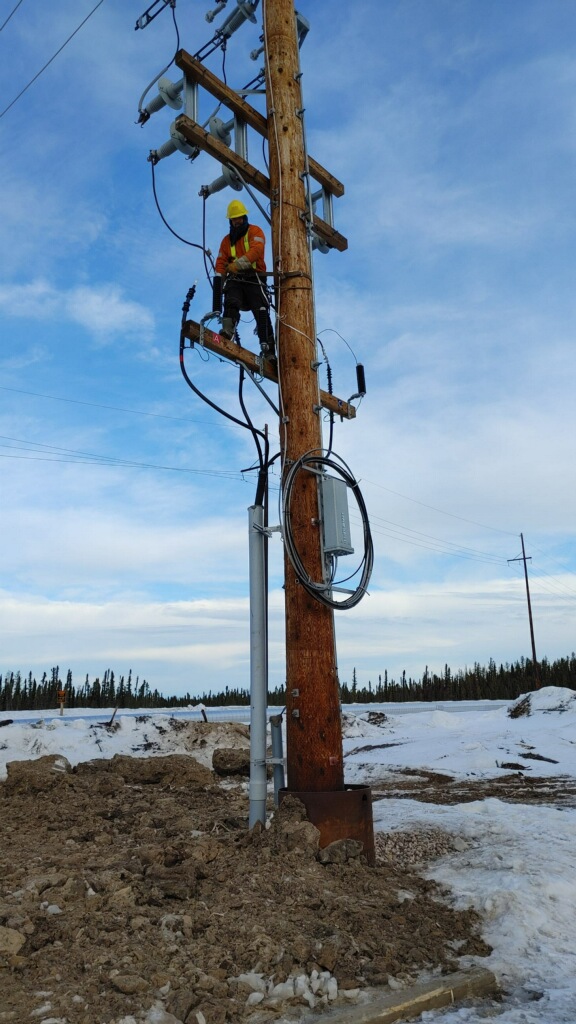
Fall operations are when many employers feel the workforce reality most sharply: new hires are trying to find their footing, the experienced hands are bracing for storm response, and planners are trying to balance preventive work with whatever the weather decides to deliver. In Canada’s electricity sector, the labour conversation is no longer a “future problem.” Electricity Human Resources Canada (EHRC) labour-market work has been consistently flagging recruitment and retention pressure, driven by retirements, turnover, and competition from other sectors—at the same time the country is trying to expand and modernize the grid. (ehrc.ca)
This Employer Spotlight is written for the people who build crews: utility and contractor leaders, supervisors, safety and training teams, and HR partners. The goal is practical and actionable, not theoretical—and not a substitute for your organization’s procedures, collective agreements, or jurisdictional requirements.
1) Start with an honest value proposition: the “employer of choice” test
EHRC’s recent research on positioning the electricity sector as an employer of choice points to a reality many supervisors already hear in interviews and exit chats: candidates and workers weigh compensation, work-life balance, advancement opportunities, and safety culture—often as a package. (ehrc.ca)
In linework, the employer value proposition is not a poster on the wall. It shows up in everyday decisions: who gets mentored, how overtime is managed, whether storms are staffed in a way that protects recovery time, and whether the crew believes the company will back them when they stop a job for safety.
What employers can do now:
- Translate “mission” into specifics. Candidates understand reliability, public safety, and restoring power after storms. Make the role concrete: what a first-year apprentice actually does, what good progression looks like, and what support exists when the work gets hard.
- Be transparent about the hard parts. Travel, shift work, storm callouts, and physically demanding conditions can be a selling point to the right person—but only if you’re honest and match the reality on day one.
- Build a visible safety narrative. Prospective employees often ask about safety and qualifications. (ehrc.ca) Don’t oversell. Instead, show how competence is built (training, mentoring, supervision) and how work is planned and authorized in your environment.
2) Treat the apprenticeship pathway as a product you must deliver well
Powerline Technician is a Red Seal trade with a national occupational standard and exam structure. (www.red-seal.ca) Employers don’t control every element of apprenticeship, but they do control the experience that determines whether a capable person stays long enough to become a journey-level worker.
Across Canada, the details vary by province/territory, but the system logic is consistent: the employer’s on-the-job training, the apprentice’s logbook/progression, and technical training delivered by recognized training providers all have to align. In Ontario, for example, organizations like IHSA and MEARIE are deeply embedded in delivering Powerline Technician apprenticeship/technical training (with employer registration and documentation requirements called out in their materials). (www.ihsa.ca)
What employers can do now:
- Map the apprentice journey like you would a storm plan. Identify the “failure points” (long waits for seats in technical training, inconsistent mentoring, mismatched work opportunities that slow logbook completion). Fixing these is retention.
- Standardize mentoring expectations. A mentor program fails when it’s “whoever’s available.” Define what good looks like: daily briefings, job walkdowns, after-action debriefs, and a consistent approach to competency sign-off (within your rules and collective agreement).
- Protect learning time during shoulder seasons. Fall can become a grind of prep work plus overtime. If an apprentice’s only role is “extra hands,” your pipeline becomes a revolving door. Plan for structured exposure to core tasks so apprentices see progress.
3) Recruitment: widen the top of the funnel without lowering the bar
When employers say “no one wants to work,” the more accurate statement is usually: “the people we need have options.” EHRC’s Labour Market Intelligence work emphasizes that the electricity sector must be proactive and innovative in recruitment while maintaining job quality and building the skills needed for the work. (ehrc.ca)
Widening the funnel is not about relaxing standards that protect workers and the public. It’s about removing avoidable friction and being more intentional about where candidates come from and how they’re assessed.
What employers can do now:
- Build pre-hire clarity around requirements and timelines. Red Seal and apprenticeship structures can be confusing to outsiders. Use simple language: typical progression, required technical training, and what “time to competence” realistically means.
- Partner with reputable training and sector organizations. In Ontario, for instance, apprentices access structured technical training through established delivery agents and trade programs (e.g., IHSA Powerline Technician Apprenticeship Training; MEARIE Powerline Technician levels). (www.ihsa.ca)
- Target adjacent experience pools. Labourers and operators who already thrive outdoors, in traffic control environments, or in utility construction often have the stamina and safety mindset you need. Don’t assume you can only hire “finished” talent.
- Use realistic job previews. A short ride-along equivalent (where permitted), yard tour, or “day-in-the-life” briefing reduces early attrition by aligning expectations.
4) Retention is built in the day-to-day: schedule design, respect, and progression
Linework employers can’t eliminate storms, but they can eliminate avoidable burnout. Retention improves when workers feel three things: (1) they are safe and supported, (2) their time and family life are respected, and (3) their career is moving somewhere.
EHRC’s sector-wide labour work underscores that shortages and turnover are real constraints and that a broader human resources strategy is required—one that protects work quality and ensures training and skills. (ehrc.ca)
What employers can do now:
- Make advancement visible. Publish what progression looks like: apprentice milestones, crew lead pathways, foreperson/supervisor development, and specialist tracks (e.g., underground, rubber glove/live-line roles where applicable in your system).
- Codify fair access to overtime and premium work. Perceived favoritism drives exits. Even when the rules are clear, communication often isn’t.
- Invest in the “middle”—forepersons and crew leads. This group is the retention hinge: they translate policy into the lived experience. Give them practical leadership training, job-planning support, and authority matched to accountability.
- Do stay interviews, not just exit interviews. Ask your top performers what would make them leave. Then act on one or two changes per quarter that people can see.
5) Training and safety culture: don’t confuse certification with competence
Storm readiness puts training quality on display. Under pressure, a crew falls back to habits. Employers who retain strong crews tend to be the ones who build consistent habits: job planning, communication, and controlled execution.
Canada’s formal trade structures (e.g., Red Seal occupational standards and exam weighting) provide an important backbone. (www.red-seal.ca) But employers still need local competency systems: what “qualified” means for specific tasks on specific assets, with the right supervision, in the right conditions.
What employers can do now:
- Create a competency matrix tied to your work types. Don’t overcomplicate it. Start with the most common tasks in fall and storm periods: switching support (as applicable), pole change-outs, conductor repair, traffic control coordination, restoration triage, and customer-facing safety.
- Use training providers strategically. Where your jurisdiction uses external training delivery agents (e.g., IHSA’s Powerline Technician Apprenticeship Training in Ontario), treat those sessions as part of a larger plan—pre-work before the course, structured skill application after the course, and documented coaching. (www.ihsa.ca)
- Run post-storm after-action reviews that include apprentices. Capture lessons on logistics, communications, job package quality, material staging, and fatigue management. Then feed those lessons into refresher training and pre-storm briefings.
6) Mobility, recognition, and the “Canadian workforce” reality
One retention lever that is often overlooked is how an employer supports a worker’s long-term portability without making them feel like they must leave to grow. Red Seal structures exist to support common standards and interprovincial mobility. (red-seal.ca)
Employers can turn this into a strength: “You can build a career here that’s recognized broadly—while still being supported locally.” The practical angle is simple: help apprentices and journey-level workers understand the credential path, exam expectations, and how technical training seats and scheduling work in your jurisdiction.
7) A fall operations checklist for employers (workforce edition)
Use this as a conversation starter with operations, training, safety, and HR—not as a one-size-fits-all program.
- Recruitment pipeline: Do we have defined intake windows for apprentices/ground workers? Do applicants know the pathway and timeline?
- Apprentice progression: Are logbooks, technical training bookings, and field opportunities aligned for the next six months?
- Mentorship capacity: Have we protected time for coaching, job briefs, and competence sign-off?
- Fatigue and scheduling: What’s our planned approach to callout rotation and recovery time as storm season ramps up?
- Training integration: After external training blocks (where applicable), do we have a structured plan for skill application and evaluation?
- Retention signals: Have we done stay interviews with key performers in the last 90 days? What are we changing based on what we heard?
What a “strong crew” really looks like in October
In storm season, strong crews are not just the ones who can work fast. They are the ones who can plan, communicate, execute safely under pressure, and recover well enough to do it again tomorrow. Employers build that capability in the weeks and months before the storm—not during it.
Canada’s electricity workforce challenge isn’t solved by any single measure. The credible path forward is a stack of consistent choices: clear recruitment messaging, a well-managed apprenticeship journey, visible progression, investment in front-line leadership, and a safety culture that workers trust when the weather turns. EHRC’s labour-market intelligence frames the urgency. The rest is execution—yard by yard, crew by crew. (ehrc.ca)