
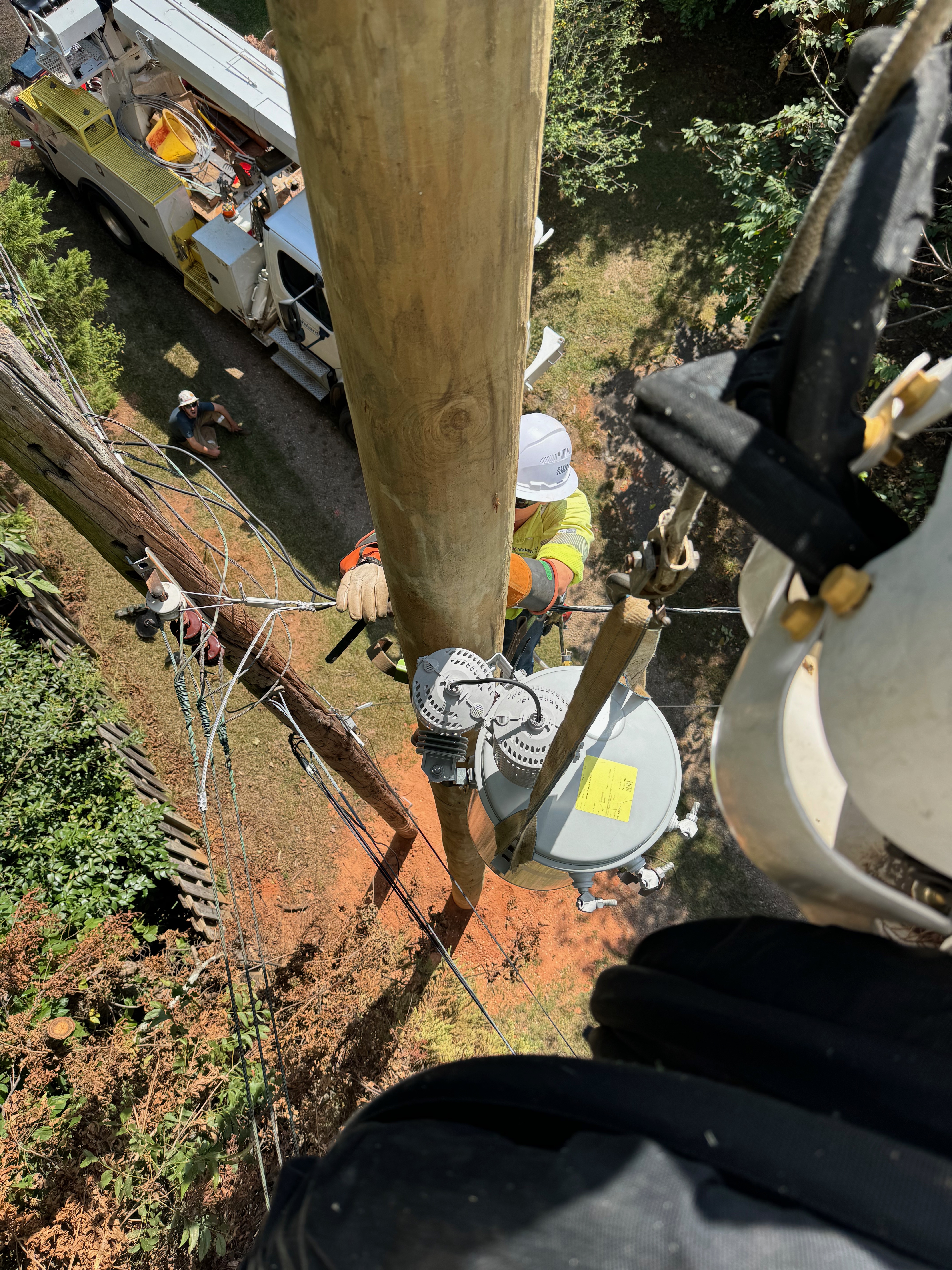
In the powerline trade, we talk about “the tailboard” as if it’s the moment safety culture shows up. But the truth most seasoned forepersons already know is simpler: the quality of the tailboard is downstream of everything that happened before it—how the job was planned, what information was shared, what the company rewards, how the leader responds to bad news, and what the crew believes will happen if someone raises a concern.
Storm readiness, fall operations, and restoration work put that reality on full display. Long hours, shifting priorities, changing hazards, public pressure, supply constraints, and unfamiliar circuits don’t just raise risk—they stress-test a company’s planning discipline and leadership habits.
This article focuses on what employers, supervisors, and crew leads can do before the tailboard so the briefing becomes a confirmation of readiness—not a last-minute attempt to manufacture it. Nothing here replaces your utility or contractor procedures, jurisdictional regulation, or manufacturer instructions. Treat it as a culture-and-planning checklist to strengthen how you run work.
What a tailboard is (and what it isn’t)
Canadian Centre for Occupational Health and Safety (CCOHS) describes safety talks—often called toolbox talks, safety briefings, or tailgate meetings—as short, focused meetings on a specific health and safety topic, valuable for reinforcing safe work habits when used as part of a broader program (not as a replacement for formal training). (www.ccohs.ca)
That framing matters in line work. A tailboard is not a magic eraser for missing switching details, unclear roles, shaky hazard controls, or misaligned expectations. In storm work, the tailboard can also become a “checkbox” ritual if the crew already believes the plan is unrealistic or the schedule is immovable.
If you want tailboards that actually change outcomes, start by treating them as a verification point inside a planning system—one that reliably delivers the right information, the right equipment, the right competencies, and the right controls to the jobsite.
Planning is hazard control (especially in storms)
In restoration, the job plan often changes faster than paperwork can keep up. That’s exactly why the planning habits that exist before storm season become decisive during it.
Energy Safety Canada’s electrical safety program guidance highlights pre-job safety planning elements such as completing a risk assessment related to the work task and using recognized checklists/standards to support pre-job briefing and planning. (www.energysafetycanada.com)
Meanwhile, CSA Z462 public materials point to the expectation that an electrical safety program include risk assessment procedures and that job safety planning and job briefing are part of the framework. (publicreview.csa.ca)
For powerline leaders, the takeaway is practical: planning is a primary control. It’s how you reduce exposure before PPE and work techniques even enter the picture. In storm conditions, good planning also reduces “cognitive overload”—the mental clutter that leads to skipped steps, assumptions, and miscommunication.
Three “before-the-tailboard” planning behaviours that pay off in fall operations
- Make the plan visible early: deliver job packets, switching intents, hazard notes, and site constraints early enough that the crew can challenge them. The goal is not perfection; it’s time for questions.
- Plan around change: assume access, weather, circuit status, and scope will change. Build a re-brief trigger list (examples below) so you’re not debating “do we need to stop and talk?” when the pressure is on.
- Pre-assign roles and decision rights: “who decides” is part of hazard control. When restoration gets hectic, ambiguity about who calls the stop can become the hazard.
Leadership sets the ceiling for honesty at the tailboard
Most crews can spot the difference between a briefing that invites input and one that’s just a speech before the truck doors slam. The cultural question is: What happens when someone says the plan won’t work?
Safety talks work best when they are relevant, timed close to the task, and integrated into a broader program—CCOHS emphasizes they complement formal training and should fit the work and conditions. (www.ccohs.ca)
In restoration, relevance means the leader is willing to surface uncomfortable realities:
- We’re fatigued and the shift is long.
- We’re short a piece of gear or the right material.
- We’re in an area with public interference or traffic complications.
- We’re working with unfamiliar plant, unusual configuration, or incomplete information.
When leaders treat these as “complaints,” the crew learns to stay quiet—and the tailboard becomes theater. When leaders treat them as planning inputs, the crew learns that speaking up is part of the job.
Two leadership moves that raise the quality of every tailboard
- Reward the first dissent: the first person to identify a mismatch between the plan and the field should be thanked publicly. That one moment can set the tone for the whole day.
- Separate urgency from shortcuts: restoration is urgent. But if urgency consistently equals “skip the controls,” you’re training your workforce to take risk on command.
Crew expectations: from values to observable behaviours
Many organizations say “safety is our priority.” Line crews judge safety culture by what is tolerated on the hard days. The strongest safety cultures translate values into crew expectations that can be seen and coached.
Try expressing expectations as behaviours that a peer could verify:
- Stop-work is normal: anyone can call a stop when conditions change or controls aren’t in place.
- We re-brief on change: if the job scope, location, circuit status, access, weather, or the work method changes, we pause and reset the plan.
- We match the job to competence: task assignments consider qualification, currency, and familiarity with the specific work (not just “years in the trade”).
- We do not normalize broken layers: missing barriers, unclear switching, incomplete documentation, or “we’ll figure it out there” is a trigger to slow down and escalate.
These expectations help crews self-correct without waiting for a supervisor to notice.
Make the tailboard shorter by doing more work beforehand
One reason tailboards drift into long, repetitive meetings is that they’re being used to compensate for planning gaps. Instead, aim for a briefing that is short because it’s focused: confirm the plan, confirm the hazards, confirm the controls, confirm roles, confirm communications, confirm re-brief triggers.
Energy Safety Canada’s guidance points employers toward structured pre-job planning and risk assessment as part of an electrical safety program. (www.energysafetycanada.com)
And CSA Z462 public review materials indicate that job safety planning and job briefing sit alongside risk assessment procedures within workplace electrical safety program expectations. (publicreview.csa.ca)
For fall operations and storm readiness, that suggests an operational improvement target: shift complexity left. Do the heavy thinking earlier in the process so the crew’s morning energy is spent verifying and adapting, not inventing the plan at the tailgate.
Practical “pre-tailboard” inputs that improve field execution
- Minimum job package standard: what must be known before wheels roll (maps, switching intent, access constraints, contact list, special hazards, customer sensitivities).
- Material readiness check: confirm critical components, temporary supplies, and backup options before dispatch, not after arrival.
- Fatigue plan: define break triggers, relief arrangements, and “no-go” thresholds for extended restoration periods.
- Public interface plan: traffic control approach, signage, spotter roles, and what to do when the public crosses the line.
Re-brief triggers: decide before you’re under pressure
Storm work is a string of changes. The question isn’t whether conditions will shift; it’s whether the crew has an agreed, non-negotiable list of changes that force a pause.
Below is a generic set of re-brief triggers to adapt to your procedures:
- Scope change: the job turns from repair to replacement, or from distribution to customer service equipment, etc.
- Circuit status change: planned de-energized work becomes energized, or the clearance/hold status changes.
- Work method change: different approach, different access, different equipment, or different temporary configurations.
- Environmental change: wind increases, lightning approaches, visibility drops, ground conditions degrade, flooding/ice presents new hazards.
- Crew change: relief arrives, people rotate, new operator joins, or a key competent person leaves the site.
- Near miss / close call: any event that creates a “that was close” moment is an automatic pause-and-reset.
Deciding these triggers in advance reduces debate in the moment—and makes the tailboard a living tool, not a morning-only ritual.
For employers and leaders: audit what’s happening “upstream”
If your tailboards aren’t effective, resist the temptation to “train the tailboard” first. Look upstream. Use your next storm response or fall operations cycle to review what information and support was missing at the point of work.
CCOHS emphasizes that safety talks are most effective when they fit the conditions and complement the broader health and safety program. (www.ccohs.ca)
So treat tailboard quality as a measure of system health. If briefings are rushed, vague, or one-way, it may indicate the plan arrived late, roles were unclear, risk assessment wasn’t practical, or leaders believe schedule pressure outranks field reality.
Three upstream questions to ask after a tough day
- What did the crew learn only after arrival? (access, plant condition, customer constraints, hazards)
- What control depended on “remembering” instead of a system? (a checklist, a standard, a pre-dispatch confirmation)
- What did we unintentionally reward? (speed over clarity, silence over questions, improvisation over escalation)
The bottom line
Storm readiness isn’t only about trucks, stock, and mutual aid. It’s also about whether your planning and leadership culture can keep work controlled when everything around the job is changing.
When safety culture is built before the tailboard—through clear expectations, earlier planning, honest leadership, and defined re-brief triggers—the briefing becomes what it was meant to be: a short, relevant, crew-owned check that the job is truly ready to execute.