
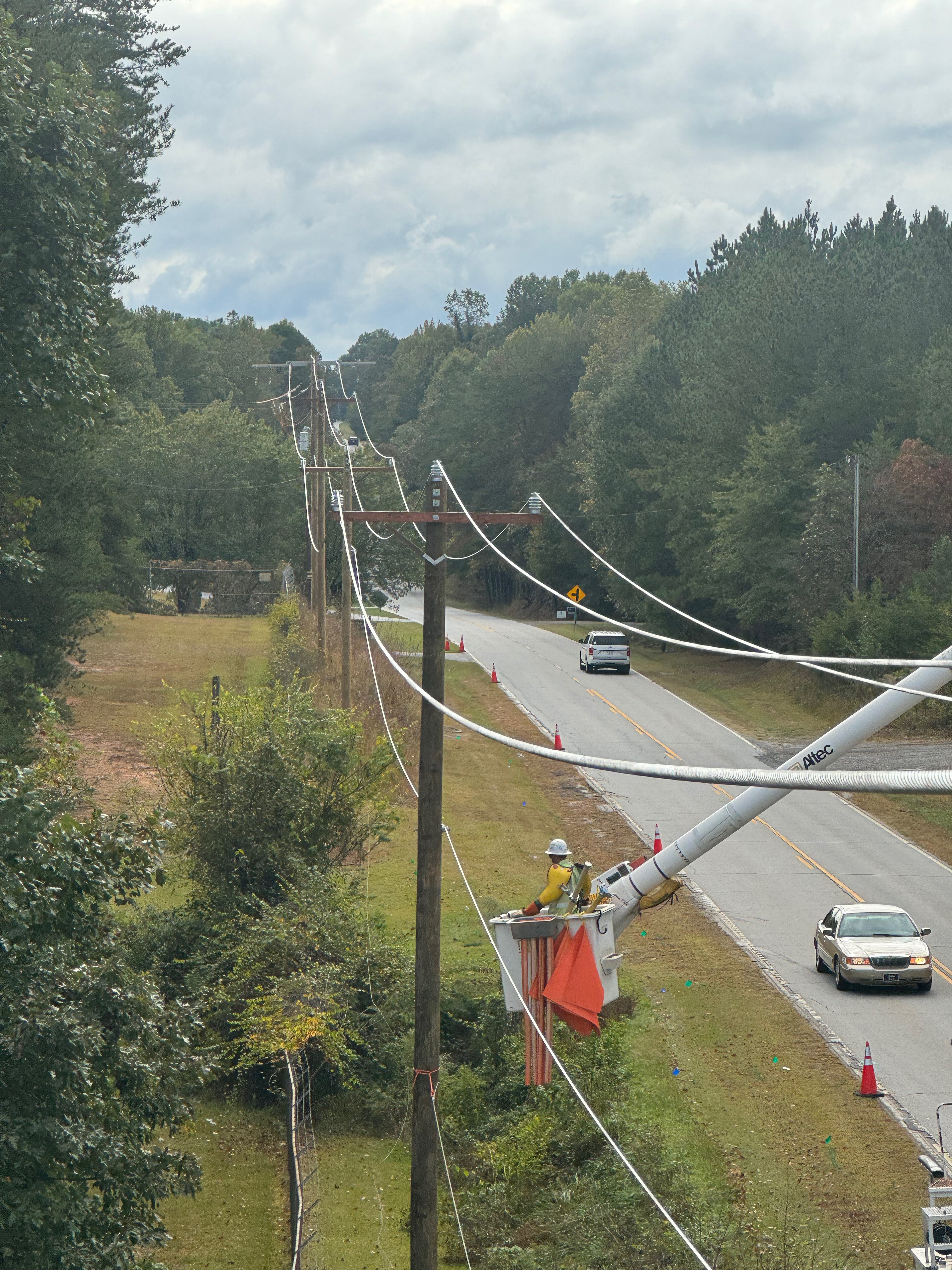
Every fall, storm readiness moves from planning to reality. Mobilizations get faster, daylight shrinks, road conditions change, and restoration windows tighten. In that pressure, the industry’s “career” conversation stops being an HR topic and becomes an operational one: the next generation has to be ready—safely—before the system demands it.
In Canada, the most common shared reference point for what a competent Powerline Technician does is the Red Seal Occupational Standard (RSOS), developed by trade representatives and recognized by the Canadian Council of Directors of Apprenticeship (CCDA). It describes the scope of the trade and the work activities a ticketed PLT is expected to perform across the country. (www.red-seal.ca)
But an RSOS alone doesn’t produce a journeyperson. People do—through training systems, supervision, feedback, and day-to-day mentoring decisions made in yards, on tailboards, and at the end of a long shift when it would be easier to “just get it done.” This article looks at the progression from apprentice to journeyperson as a build process: what needs to be in place for safe capability to stack, especially going into fall operations and storm work.
Start with a shared definition of competence
One practical advantage of Red Seal is that it gives the trade a common national vocabulary: tasks, major work activities, and the idea that mobility matters. Red Seal also provides exam information and a standard structure that provinces and territories align with in different ways. (red-seal.ca)
For leaders and trainers, the key question isn’t “Are we following the RSOS?” but “Are we building the capabilities the RSOS assumes?” The RSOS describes routine occupational skills, planning, documentation, and hazards awareness—plus explicit expectations around supporting apprentices and learners. (red-seal.ca)
Practical takeaway for crews: Use the RSOS language as a consistent checklist for what exposure an apprentice is actually getting. Not just whether they’ve been on a job, but what they did, what decisions they owned, what hazards they identified, and what protections they worked under.
The “four-year” pathway is real—but it’s not the whole story
Across Canada, apprenticeship programs commonly reflect a multi-period structure that blends on-the-job training with technical training. In Alberta, for example, apprenticeship information describes a four-year term and sets out minimum on-the-job and in-class requirements by year. (alis.alberta.ca)
In other jurisdictions, trade profiles similarly emphasize the outdoor, all-weather reality of the work and note that PLTs may progress into senior, supervisory, planning, safety, technical support, or system control roles. (www.gov.nl.ca)
Those structures matter because they set expectations for:
- Cadence: time blocks where apprentices should progress from observation to assisted performance to independent performance under supervision.
- Coverage: ensuring apprentices see more than one “comfort zone” (e.g., distribution construction, maintenance, switching environments, restoration, and job planning/prints).
- Documentation: recording tasks, competencies, and sign-offs in a way that is consistent with the apprenticeship authority’s rules.
However, the pathway’s success depends on what happens in between the periods: the coaching habits of journeypersons, the job selection decisions made by forepersons, and whether the organization makes room for deliberate learning without compromising system needs.
Mentorship: not a nice-to-have—an operational control
Mentorship in line work is often described informally: “watch, then do.” What’s changing is the environment around that tradition. Technology shifts, system complexity, and storm intensity all increase the number of scenarios a new PLT must be ready for. Sector organizations have been explicit that training effectiveness impacts a PLT’s ability to work safely and adapt to new technology. (ehrc.ca)
At an industry level, Electricity Human Resources Canada (EHRC) positions itself as a source of labour market insights and career development tools, including a national mentorship matching tool (MentorJunction). (ehrc.ca)
For employers: treat mentorship like any other critical process: define it, train it, and measure it. A mentor program doesn’t need to be complicated, but it should be explicit about expectations such as:
- Consistency: where possible, keep an apprentice with a small pool of mentors long enough to build shared language and trust.
- Progression: agree on what “ready for the next step” looks like (e.g., pre-job planning participation, hazard identification, equipment setup checks, material handling, and documentation routines).
- Feedback: short, structured debriefs—especially after near-misses, changing conditions, or restoration work—so lessons don’t evaporate with fatigue.
For journeypersons: mentorship is also self-protection. An apprentice who understands the “why” behind limits and protections is less likely to improvise under pressure. The RSOS recognizes that the work presents risks to the worker, the public, and the system—and it frames planning and documentation as part of how PLTs organize work. (red-seal.ca)
Build storm capability before the storm
Storm work is where gaps show up. That’s not criticism—it’s physics, weather, and workload. The risk is when a crew’s training pipeline relies on storms as the primary teacher.
From a Canadian emergency management perspective, government framing emphasizes prevention/mitigation, preparedness, response, and recovery—language that also maps cleanly onto how utilities should build workforce readiness. (www.publicsafety.gc.ca)
So what does “preparedness” look like for apprentice-to-journeyperson progression in the fall?
1) Pre-storm role clarity for apprentices
Before peak season, leaders can define what apprentices may do (and under what supervision), where they’ll be positioned in the restoration organization, and how communications and escalation will work. This is not a substitute for employer procedures or jurisdictional rules—it’s an organizational readiness step so nobody is making up roles at 2 a.m.
2) Repetition on the fundamentals that storms stress-test
Storms make basics harder: travel, fatigue management, documentation discipline, public interface, traffic control, switching coordination, and material handling. The RSOS emphasizes planning work using documentation, codes, standards, and regulations, and it also identifies tasks such as determining lift types and recognizing hazards and limitations. (red-seal.ca)
3) After-action learning that actually sticks
Post-storm debriefs shouldn’t just be for supervisors. They are a mentorship accelerator—if apprentices are invited to talk through what they saw, what confused them, and what they’d do differently next time. Capture those lessons and feed them into technical training support, which the RSOS recognizes as part of supporting apprentices’ progress. (red-seal.ca)
Mutual assistance is also a development environment
In many regions, storm response involves mutual assistance. In Ontario, Electricity Canada describes the Ontario Mutual Assistance Program (OnMAG) as a single point of contact for utilities to request and offer assistance resources during damaging events, with member coordination and regular meetings that share storm restoration experiences and lessons learned. (www.electricity.ca)
For workforce development, this matters because mutual assistance brings together different systems, work methods, and local rules. That can be a great learning environment—if orientation, supervision expectations, and communication norms are clear. Apprentices can benefit from exposure, but only when host/visitor responsibilities are well-defined and consistent with the employer’s and jurisdiction’s requirements.
Progression isn’t just hours—it’s breadth and judgment
Apprenticeship programs necessarily track time and completion requirements, but field readiness is also about breadth and decision-making. One of the most common traps in progression is creating a “one-job apprentice”—highly competent at a narrow set of tasks, but underexposed to planning, prints, switching environments, or restoration complexity.
To counter that, many organizations use some form of rotation. A simple, practical model is to map assignments to three buckets:
- Core construction and maintenance: work that builds foundational tool use, materials handling, and safe routines.
- System operations exposure: job planning, documentation discipline, and coordination (as allowed by employer and jurisdictional practice).
- Restoration readiness: controlled exposure to changing conditions, public interface, and time pressure—paired with strong supervision and debrief.
When rotations are hard to schedule, managers can still create “breadth” by deliberately assigning apprentices small ownership areas within a job: site setup checks, tool and material staging verification, documentation preparation, or a structured walk-around hazard review—always consistent with employer procedures and the crew’s work protection approach.
What good mentorship looks like on a hard day
Mentorship is easiest when the schedule is light. The real test is fall operations: shorter days, more call volume, and the temptation to shortcut learning conversations. “Good mentorship on a hard day” often looks like:
- Two-minute expectation-setting before the task starts (what right looks like, what to watch for, when to stop and ask).
- Active verification rather than passive assumption (apprentice repeats back the plan; mentor checks understanding).
- One learning point after the task (what went well, what could improve next time, what to review before the next similar job).
None of this replaces formal training, employer procedures, or jurisdictional requirements. It simply builds the habits that keep an apprentice inside the safe boundaries of the work while they accumulate competence.
A note for apprentices: own your progression without overreaching
If you’re an apprentice, you’re balancing two truths at once: you need reps to grow, and you must never “prove yourself” by stepping outside training, supervision, or procedures. A productive approach is to come to work with a short list of goals you can safely pursue:
- Ask for context: “What’s the risk we’re controlling here?”
- Ask for a role: “Can I take ownership of staging/material verification/documentation prep under your direction?”
- Ask for feedback: “What should I tighten up before the next one?”
Also, learn the structure of your jurisdiction’s apprenticeship expectations and how Red Seal endorsement is achieved through completion and the interprovincial exam. Job Bank and Red Seal resources provide high-level descriptions and exam details, while your provincial/territorial apprenticeship authority provides the binding requirements. (on.jobbank.gc.ca)
The bottom line
Storm readiness is not only about poles, wire, and trucks—it’s about whether the workforce can scale safely when conditions degrade. The path from apprentice to journeyperson is where that resilience is manufactured.
If the industry wants more capable ticketed PLTs five years from now, the work starts today: aligning field exposure to a common occupational standard, treating mentorship as an operational control, and making fall operations a deliberate development season rather than an accidental trial by fire. (www.red-seal.ca)