
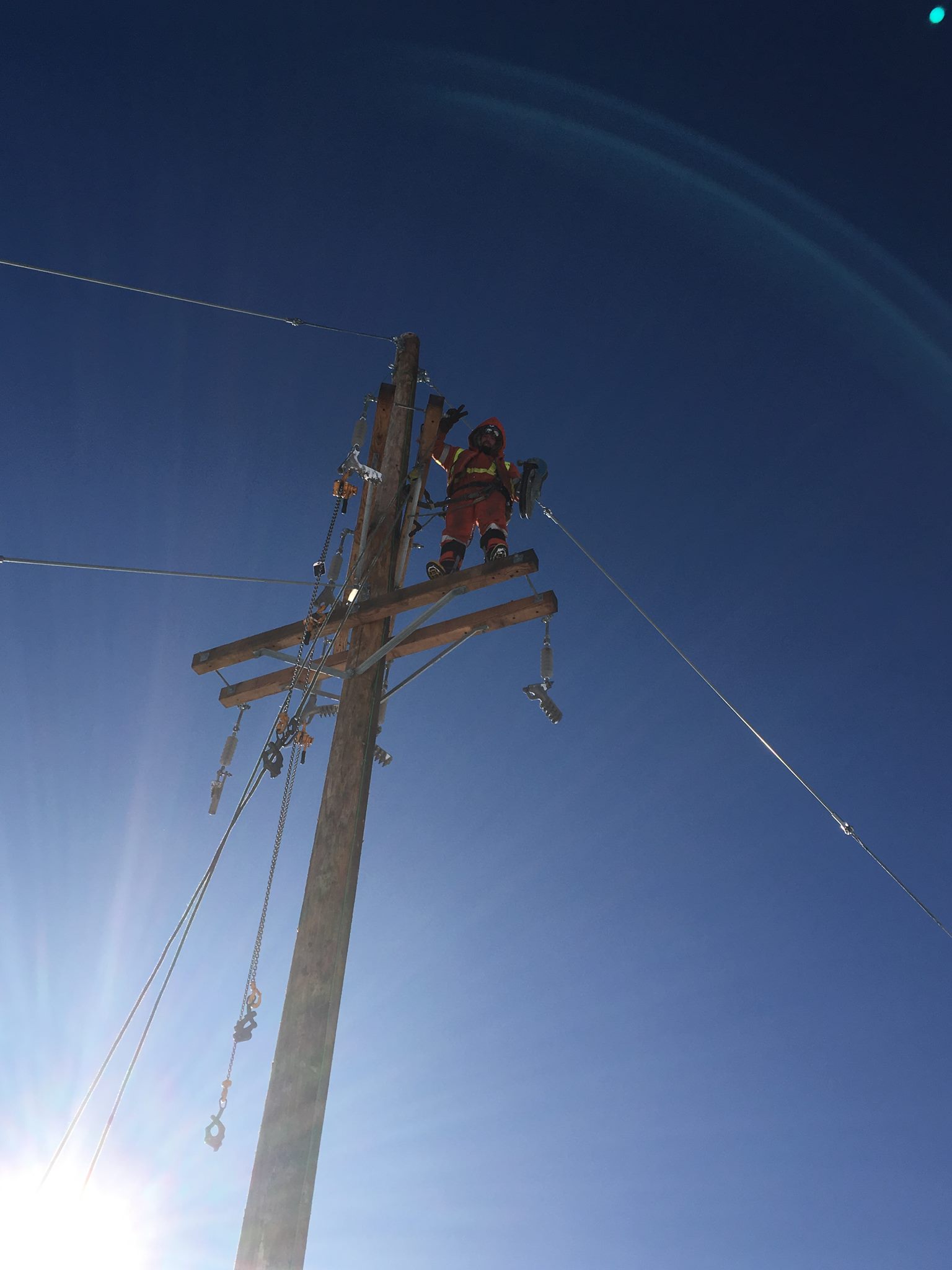
Winter readiness in Canada has always been about weather, but the “what comes next” conversation is changing. Storm restoration remains the visible test, yet the groundwork now spans year-round vegetation strategy, mutual assistance coordination, reliability reporting expectations, cyber/OT preparedness, and winter peak planning shaped by electrification. For powerline workers and employers, that shift shows up in the fall: more preseason checks, more cross-functional drills, more pressure to document readiness, and more emphasis on how quickly a system can safely localize damage and recover.
Below is a practical look at what’s coming into focus across Canada—framed for line departments, contractors, training groups, and operations leaders. It’s not a substitute for your utility’s rules, your jurisdiction’s regulations, or your manufacturer procedures. It’s a set of priorities to sanity-check before the first prolonged cold snap, freezing rain event, or multi-day windstorm hits.
1) Winter readiness is becoming “resilience readiness”
At the federal level, the reliability/resilience lens is widening. Natural Resources Canada (NRCan) has been explicit that Canada’s electricity infrastructure and operations must strengthen reliability and resiliency against extreme climate-related events and cyber threats as the grid expands and decarbonizes. NRCan also points to the growing role of distributed energy resources (DER) and bi-directional charging (V2X) as potential resilience tools over time—meaning distribution utilities may face increasing expectations to plan for (and sometimes operationalize) customer-side resources during disruptions. (natural-resources.canada.ca)
In Ontario, the direction is even more operationally tangible. The Ontario Energy Board (OEB) has been advancing work tied to distribution sector resilience and major-event performance evaluation, and has also been developing reliability and power quality initiatives that aim to increase transparency and consistency—down to discussion of feeder-level reliability reporting. For utilities, that implies a continuing move toward more granular tracking and clearer narratives about what happened, what was done, and what will be improved. (engagewithus.oeb.ca)
For field leaders, the takeaway is straightforward: winter readiness is less about a single “storm plan binder” and more about demonstrable capability—people, parts, access, communications, and controls—proven in exercises and reflected in data.
2) Workforce is the constraint you can’t dispatch around
Most winter readiness checklists assume crews will materialize when needed. In reality, staffing pressure shows up in every phase: preparedness work that doesn’t get done in shoulder season, longer restoration timelines when damage is widespread, and higher exposure to fatigue risk when events stack up. Even when mutual aid is available, logistics and administrative readiness can either speed help to the yard—or slow it at the worst possible moment.
Ontario’s mutual assistance ecosystem is one example of how utilities are formalizing rapid resource sharing. Electricity Canada describes its Ontario Mutual Assistance Program (OnMAG) as a single point of contact for utilities to request and offer resources during damaging events, supported by an agreement and regular knowledge-sharing among participants. Nationally, Electricity Canada has also discussed the evolution of mutual assistance and the ongoing reality that cross-border requirements can still slow emergency restoration. (www.electricity.ca)
Fall priority for employers: treat mutual assistance as a preseason readiness project, not a mid-storm scramble. That means confirming (well before winter) how you will onboard incoming crews, assign switching authorities, issue system maps and job packages, handle fleet fuel/charging, and manage orientation to your safety rules and incident command structure.
Practical preseason questions (yard-level)
- Onboarding: How quickly can you credential and brief visiting workers and supervisors without cutting corners?
- Fleet readiness: Are spare trucks, tire chains (where used), auxiliary lighting, and winter kits standardized and inspected?
- Spare parts: Do you have realistic counts of storm-critical material (cutouts, arresters, crossarms, connectors, triplex, poles, anchors) and an emergency replenishment plan?
- Accommodation & staging: If hotels are full, what’s your fallback (cots, warming areas, meal delivery)?
3) Vegetation and access planning is still the restoration multiplier
In many Canadian service territories, “winter damage” is still “trees plus wind plus frozen ground.” The best storm crew in the province can’t re-energize a feeder if access is blocked, rights-of-way are impassable, or hazards can’t be made safe quickly.
Hydro-Québec’s public materials underline two important realities for the industry: vegetation control is a year-round activity (including winter), and some work may require phased approaches because of access constraints. Hydro-Québec also notes that it adapts vegetation control frequency and intensity based on weather impacts and that its forestry experts determine appropriate measures near lines. (www.hydroquebec.com)
Fall priority for supervisors: plan access like you plan switching. If you know which circuits historically take the worst tree contact or drifting snow access issues, ensure you have pre-identified access points, land permissions where required, and a clearing strategy that doesn’t rely on “we’ll figure it out at 2 a.m.”
4) Customer communications expectations are rising—so operations needs cleaner info flow
Winter outages are not only a technical event; they are a public safety event. In B.C., BC Hydro’s public storm-season messaging stresses customer outage preparedness and the reality of winter storm season impacts. While that’s aimed at the public, it reflects the environment utilities operate in: customers expect timely information, realistic restoration estimates, and clear safety messaging. (www.bchydro.com)
Ontario’s government has also signaled expectations around utilities maintaining reliable communication channels during events (website, social, email/text, phone, radio). For storm readiness, that translates into an operational requirement: field status must be captured and shared in ways that support accurate updates without distracting crews from hazard control and restoration. (www.ontario.ca)
Fall priority for operations managers: run at least one scenario exercise where the control room, trouble dispatch, field supervisors, and communications team practice a high-volume outage event with changing conditions. The objective isn’t perfect messaging—it’s identifying where information breaks down (e.g., tagging, crew status, ETR logic, feeder-level visibility, or map updates).
5) Winter peak demand is a planning issue—today
Winter readiness is also about adequacy: having enough supply and flexibility during peak conditions. NRCan notes that as adoption of heat pumps grows, winter peak demand is rising—an operationally important point for many Canadian jurisdictions where winter peaks are already dominant. (natural-resources.canada.ca)
In Ontario, the IESO’s planning publications provide a window into how system planners are treating resource adequacy and reliability obligations, including capacity auction targets for winter obligation periods in future years. For line operations, these documents aren’t a call to become market experts; they’re a reminder that winter reliability is increasingly shaped by planning assumptions and performance obligations, not just storm response. (www.ieso.ca)
Fall priority for leaders: ensure winter storm readiness is integrated with winter peak operations—particularly for switching staffing, callout availability, and the ability to respond to both damage and system stress during extended cold.
6) Safety in winter: the layering problem meets electrical hazards
Cold weather drives layering. Electrical work drives arc and shock protection requirements. The friction point is real: it’s easy for well-intentioned winter clothing choices to interfere with FR systems, mobility, or PPE compatibility.
CSA Z462 is Canada’s recognized workplace electrical safety standard for arc flash and shock hazards, including PPE selection principles. For organizations that reference CSA Z462, winter work planning should include how arc-rated systems are worn and how weather protection is integrated so that non-rated outerwear doesn’t undermine arc protection where arc-rated protection is required. (Always follow your employer’s and your task’s specific arc flash hazard assessment and PPE requirements.) (arcsafety.ca)
Fall priority for safety and training groups: validate winter PPE systems during real tasks (climbing, bucket work, switching, substation access) in realistic temperatures. Confirm that gloves, hoods, face protection, and outer shells work together without creating new hazards (restricted vision, dexterity loss, fogging, snag risk, or incompatible layering).
7) Cyber and OT realities are now part of storm readiness
Storms don’t cause cyber incidents—but storms can expose cyber fragility when communications are degraded, staffing is stretched, and operational technology (OT) changes are made quickly. NRCan has highlighted the rising cybersecurity threat environment and the need to bolster critical energy infrastructure resilience, including the role of its Energy Security and Resilience Division in connecting stakeholders across government and industry. (natural-resources.canada.ca)
Fall priority for utilities: make sure storm operations can function under degraded comms and partial system visibility. That includes practical questions: What if a key system is offline? What if mobile data is saturated? How will you authenticate urgent access requests? How will you track switching and clearances if normal tools are unavailable?
What to watch next (winter 2026–2027 and beyond)
- More formal resilience expectations: regulators and governments continue to connect extreme weather, customer impacts, and performance transparency—pushing utilities toward clearer preparedness narratives and evidence-backed investment plans. (engagewithus.oeb.ca)
- Mutual assistance maturation: programs like OnMAG and evolving national mutual assistance arrangements will keep growing, but the industry will still need to solve practical barriers (credentialing, border/administrative friction, and rapid integration into local rules). (www.electricity.ca)
- Technology-enabled inspection and prioritization: utilities are increasingly discussing drones, high-definition imaging, LiDAR, and analytics to support asset and vegetation management—tools that can improve preseason targeting when used alongside field knowledge and sound engineering judgment. (www.arbres.hydroquebec.com)
Winter readiness will always be built on the fundamentals—craft skill, safe switching, disciplined hazard control, and restoration know-how. What’s changing is the operating environment around those fundamentals: more scrutiny, higher customer reliance, more complex systems, and more events that don’t respect calendars. For crews, it still comes down to arriving prepared. For employers, it comes down to building a system where preparedness is visible, repeatable, and sustainable—before the first freezing rain warning hits the phones.